Shopping cart 0 items
Donate
Member Login

Search form

Share
Login
Home
  • About
    • Mission
    • History
    • Masthead
    • Board of Directors
    • Contact
    • Privacy Notice
    • FAQ
    • Internships
  • Articles
    • Current Articles
    • Collections
      • Interviews
      • Narrative
      • History
      • Technology
      • Criticism
      • Other
    • Print Archive
    • Write for SP
  • Announcements
    • General
    • Classified
    • Events
    • Newsletter
  • Become a Member
  • Grants for Apprenticeships
  • Donate
    • Underwriting
    • Donate
    • Partners
  • Store
Ayumi Shigematsu 重松あゆみ, "Jomon Recollection"

Seeing Time: Temporality & The Kiln-Fired Object

Kristie Lui

In his book, Shobogenzo – The Treasury of the True Dharma Eye, the Buddhist priest Dogen Zenji writes about our captivation with time: 

"...For the time being, a demon with three heads and eight arms,

For the time being, the golden sixteen-foot body of a Buddha,

For the time being, a monk's staff of a master's flyswatter

For the time being, a pillar or a lantern..."

In this dharmic writing, he meditates on our material experience of time. He calls us "time beings," for we exist within time, and our experience of time is relative to all living and nonliving things. What he meant was that things exist both within and are composed of time: "We and all things are all time beings."

His wordplay, as translated into English by Ruth Ozeki, comes to mind as I sit in our gallery space at Dai Ichi Arts, contemplating the curation of our March 2022 exhibition on a selection of modern Japanese ceramics for Asia Week New York: "Future Forms: Women and Avant-Garde Sculpture in Modern Japanese Ceramics."
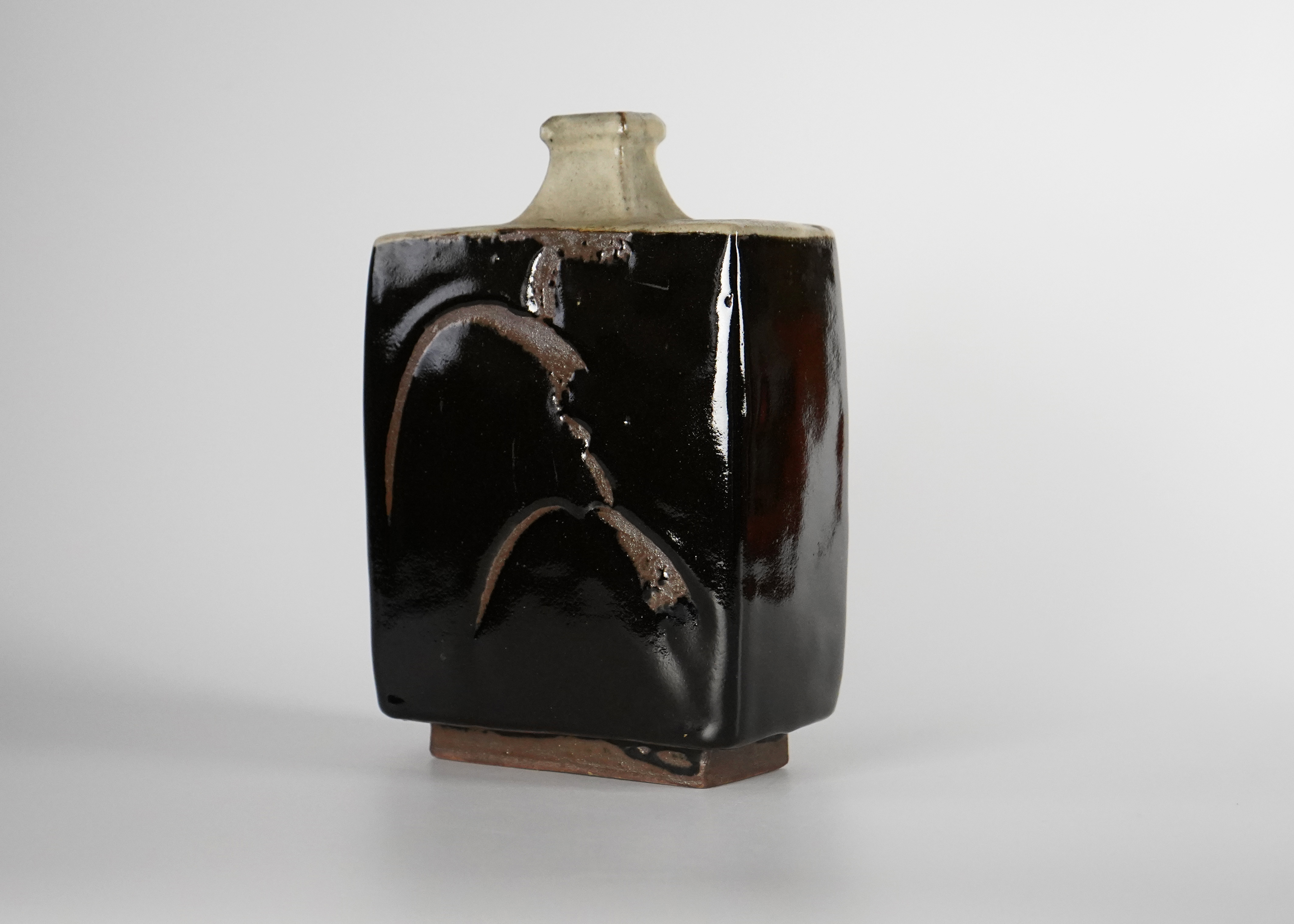
For the time being, I sit in front of a jar and a sculpture – for the time being, a vessel and an object.

It's true that the relationship between time and its objects has been a core affair in art historical discourse. The veneer of a ceramic bowl made in the Edo period doesn't necessarily differ from the surface of a bowl made today if the contemporary artist decides to recreate a historical surface technique. In other words, surfaces of modern artworks can be manipulated to appear older through artificial aging, while the piece itself is a contemporary construction. With this in mind, I looked from one object to the next. Both artworks were made in the modern age; both will continue to age or last into the future. How did the ceramic vessel feel temporally different? Why did it feel older, as though recalling a historical precedent? On the other hand, the sculpture felt suspended in its future. Its formal quality transfixed the object in its future. Indifferent to inherited traditions, it was a little anachronistic.

...
Read more

More from this issue

February 2023

Richard Nickel, Face Jugs – Part One and Two
Face Jugs – Part One and Two
By Richard Nickel
In part two of Richard Nickel's face jug animation, he looks at the region of Edgefield, South Carolina, renowned for the rise of the alkaline-glazed stoneware industry.
Read More
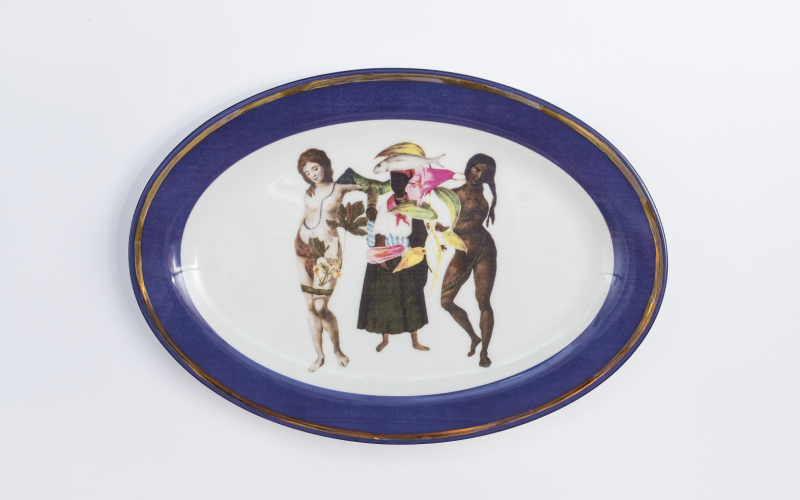
Jacqueline Bishop, The Market Woman's Story, 2022
Interview with Jacqueline Bishop
By Khalil Jannah
This month's FREE article. It's a good place for artists to explore – those tender, unsure, and vulnerable places within ourselves. For one thing, it keeps us all humble. One thing I’ve noticed in these explorations [is that] we get universal. I often say to my students, "Your very individual story is what’s going to become your universal story."
Read More
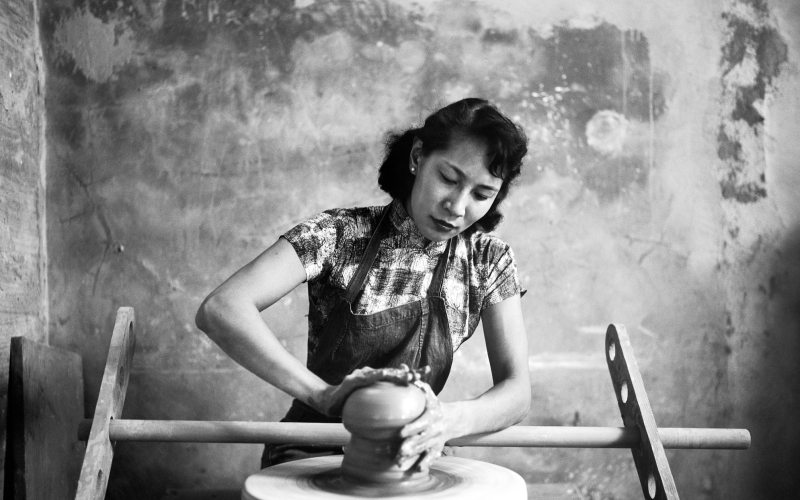
Katherine Choy in New Orleans, 1952–1955. Photo courtesy Robinson Archive. Jack Robinson, photographer (American, 1928–1997).
Katherine Choy: Radical Potter in 1950s New Orleans
By Mel Buchanan
I believe that the artist-potter should question life. This requires a continuous breaking down and summarizing to express, to relate, to find one place and move with one’s own time, yet keep a universal entity. – Katherine Choy
Read More
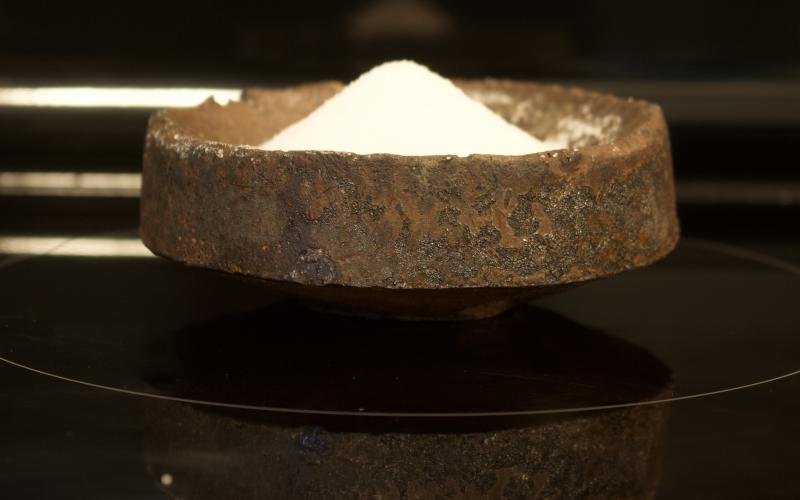
Salt Cellar by Lindsay Oesterritter, in Will McComb's home.
Pots at Rest
By Will McComb
Endless exposition could be laid down about the way a beautiful bowl or cup enhances the act of eating or drinking. Less is said of what to make of pots at rest. I propose that pots at rest are still engaged in a unique passive utility by defining and enriching how we experience our domestic space.
Read More
Back to Issue

Author Bio

Kristie Lui

Kristie Lui is a curator and Asian art specialist. She earned her master’s degree in the history of art and archaeology at the Institute of Fine Arts, New York University, where she studied the ceramics of China and Japan from the 9th – 12th centuries. She earned her bachelor’s from University College London (UCL) in the history of art and material sciences. At UCL, she practiced paper conservation and researched decorative material exchanges between England and East Asia. Her background in material art history and archaeology informs her current interests, which lie in modern and contemporary ceramics, with a particular interest in the work of women artists in contemporary craft. She is currently a specialist at Dai Ichi Arts, Ltd., an art gallery specializing in Japanese ceramics in New York City.

CONTACT  |  NEWSLETTER SIGNUP  |  COPYRIGHT © 2026 STUDIO POTTER  |  SITE DESIGN

Design by Adaptive Theme

Member Log in

  • Create new account
  • Reset your password
Forgot your password?
Continue as Guest
Become a Member
Library IP Login