Shopping cart 0 items
Donate
Member Login

Search form

Share
Login
Home
  • About
    • Mission
    • History
    • Masthead
    • Board of Directors
    • Contact
    • Privacy Notice
    • FAQ
    • Internships
  • Articles
    • Current Articles
    • Collections
      • Interviews
      • Narrative
      • History
      • Technology
      • Criticism
      • Other
    • Print Archive
    • Write for SP
  • Announcements
    • General
    • Classified
    • Events
    • Newsletter
  • Become a Member
  • Grants for Apprenticeships
  • Donate
    • Underwriting
    • Donate
    • Partners
  • Store

Save West Virginia University Ceramics

By now, you may have heard or seen the news about the massive cuts at West Virginia University. I fear this is symptomatic of greater underlying issues attacking the arts nationwide. I’m convinced what is happening at WVU is the beginning. As the news broke nationally, I heard from many friends and colleagues that their universities and colleges are in a similar predicament of "academic transformation". The proposed cuts to thirty-two undergraduate and graduate programs at West Virginia University (WVU), nine percent of majors, and sixteen percent of full-time faculty (169+ full-time faculty positions slated for termination) have focused mostly on the humanities, liberal arts, and creative arts. They recommended that ceramics, printmaking, and sculpture be eliminated as areas and that art history be discontinued. These draconian cuts will affect all our schools in art, music, and theater, as well as other valuable programs at the university.

Ceramics plays an important role in art, culture, and civilization. In ceramics' 30,000+ years of continuous history, it is one of the few things that humans have ever invented that is truly archival. Ceramics tells the story of who we are and is an intangible part of human culture. Ceramics allows us to connect with our past, present, and future. Without going into much detail, in addition to what we normally think of as art school lessons in theory and art history, I’ve applied my learnings in chemistry, math, geology, critical thinking, critical writing, archeology, anthropology, engineering, construction, programming, etc. in my teaching and studio practice.

Morgantown, where I teach and call home, was founded as a pottery town. It was one of the earliest post-colonial potteries west of Appalachia. Founded in 1785 by John Scott, Jacob Foulk, John Thompson, and Francis Billingsley, Morgantown was a major pottery center in the Monongahela Valley, producing salt-fired crockery. These grey-ware, cobalt-slipped, and salt-fired crocks were created in towns like Morgantown, New Geneva, Greensboro, etc., mimicking the blue and white porcelain from China, and shipped upriver on stern wheelers, like the ones piloted by a young Samuel Clemens who learned to captain in our area, to Pittsburgh and then down the Ohio River to towns like Cincinnati, Louisville, and down the Mississippi as far away as New Orleans.
...
Read more

More from this issue

September 2023

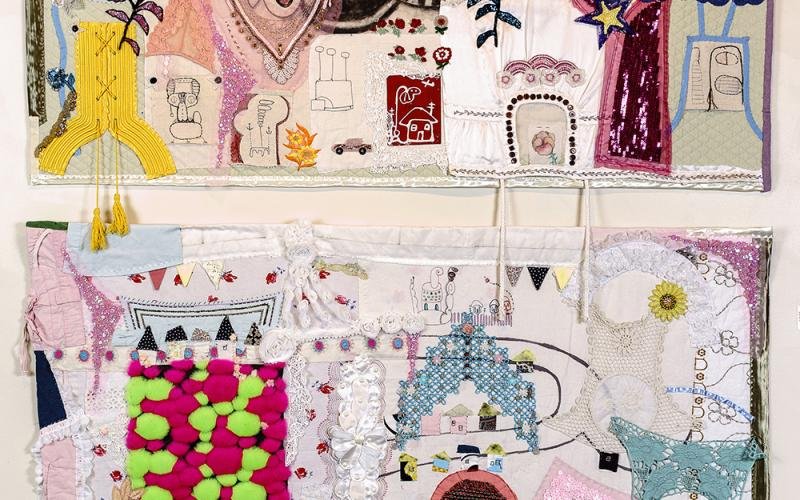
Lisa’s House, quilt.
Born from the Borderlands
By Lisa Marie Barber
Mexican folk art is the most pervasive influence in my artwork. Whether incorporated in my ceramic installations or mixed-media quilts, the compositional strategies of Mexican folk art and religious shrines are at the root.
Read More
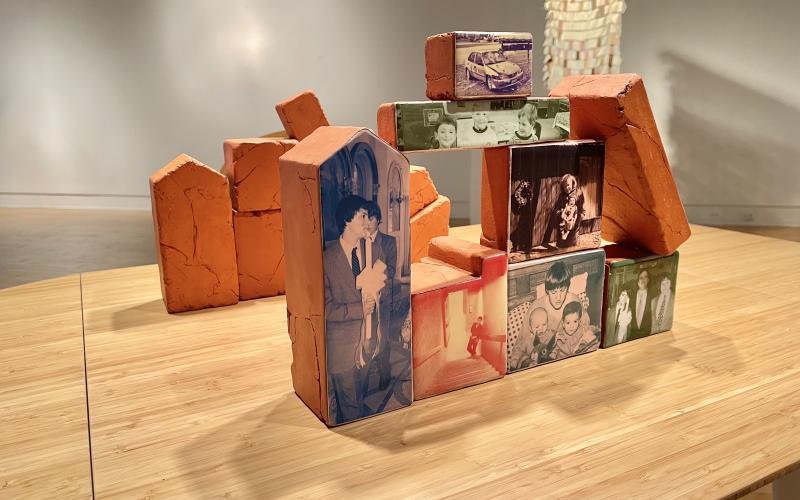
Jonny Hamos, Built Memories, 2021. Photo Credit: Jonny Hamos
Built Memories: Allegory of Change
By Jonny Hamos
Over time, I began to notice how working with clay became an allegory for changes that I have observed in the creation, duration, and entropy of human relationships, the environment, and architecture.
Read More
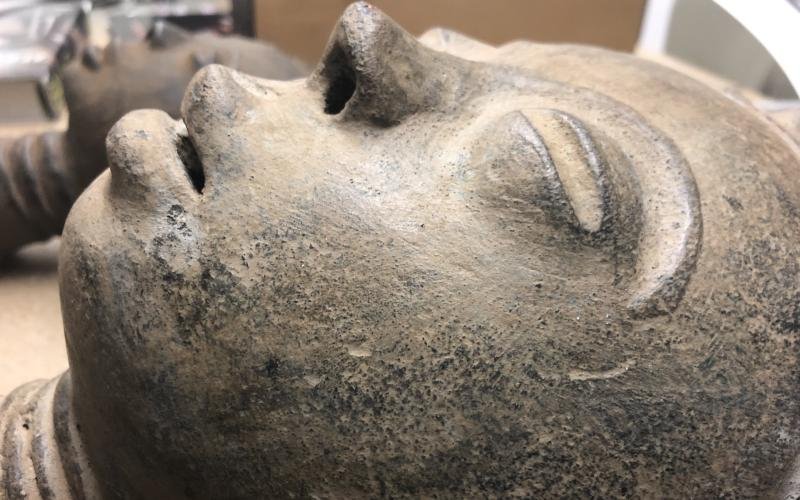
Artist Once Known, Memorial Head, circa 17th–mid-18th century. Ghana. Akan peoples. Terracotta, slip. Collection of Cheryl Olkes Collection at Chatham University. Photo by Chenoa Baker.
Elegy For The Yard That Once Smelled of Ghosts
By Chenoa Baker
The final resting place of these effigies became an ancestral grove, "till the yard smells of ghosts," until it was disrupted by colonialism. For that, I grieve for the disturbed lost souls but rejoice that a child of the diaspora reconnects with the echo of home.
Read More
Conscious Dreaming – Vicky Lindo & Bill Brookes. detail: Before Sleep
Exhibition Review: Conscious Dreaming – Vicky Lindo and Bill Brookes
By Ellen Bell
Nascent for some time, Conscious Dreaming as a concept began pre-COVID-19, in 2020, when Lindo and Brookes were invited by Aberystwyth University’s School of Art to make a new body of work using the institution’s collection of prints and ceramics as their starting point. Drawn to the work of the somewhat obscure printmaker Christine Penn and the early pioneer studio potter Frances Emma Richards, Lindo and Brookes referenced the former’s darkly-surreal iconography and the latter’s serenity of form through their ceramics.
Read More
Sponsored Content
Sponsored Content
By Paris Gibson Square Museum of Art
The Archie Bray Foundation campus teems with Robert Harrison's sculptures; his work is an icon of the Bray landscape and appears in every book, catalog, and tourist snapshot. Though Harrison has received acclaim for his sculptures, he has yet to be actively contextualized as a figure who, brick by brick, set the steadfast foundation for site-specific experimentation in the 1990s and program stability throughout the Bray's continued growth.
Read More
Back to Issue

CONTACT  |  NEWSLETTER SIGNUP  |  COPYRIGHT © 2026 STUDIO POTTER  |  SITE DESIGN

Design by Adaptive Theme

Member Log in

  • Create new account
  • Reset your password
Forgot your password?
Continue as Guest
Become a Member
Library IP Login