Shopping cart 0 items
Donate
Member Login

Search form

Share
Login
Home
  • About
    • Mission
    • History
    • Masthead
    • Board of Directors
    • Contact
    • Privacy Notice
    • FAQ
    • Internships
  • Articles
    • Current Articles
    • Collections
      • Interviews
      • Narrative
      • History
      • Technology
      • Criticism
      • Other
    • Print Archive
    • Write for SP
  • Announcements
    • General
    • Classified
    • Events
    • Newsletter
  • Become a Member
  • Grants for Apprenticeships
  • Donate
    • Underwriting
    • Donate
    • Partners
  • Store
Astour, near Zagora, Oasis region. These unique pieces, nearly 30” high, were commissioned by someone in a big city as decorative pieces in a hotel or mall. The white coating is ash from the fire pit.

Rural Red Clay – An Artist’s Journey Through the South of Morocco

David Packer

 The Weekly Souk

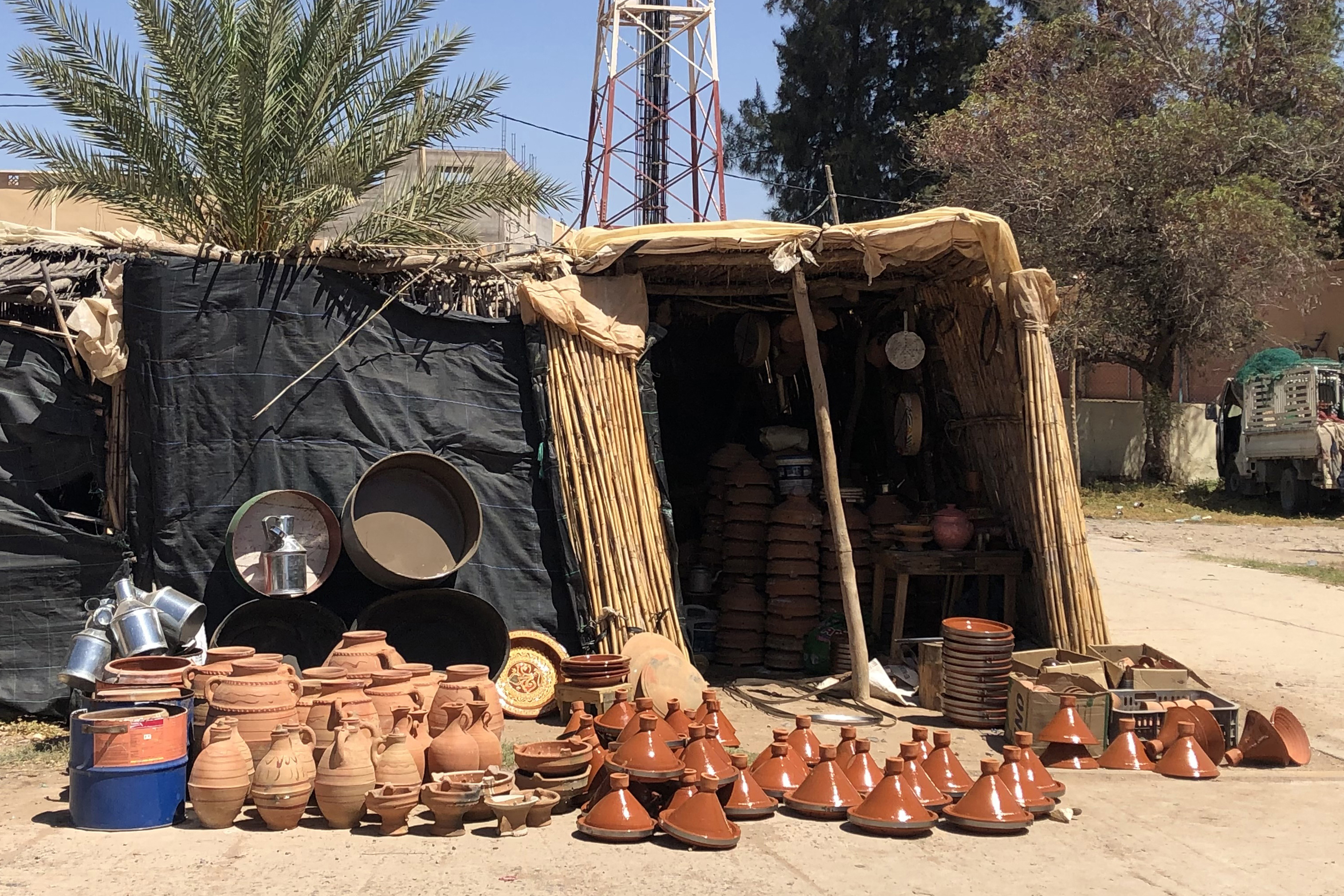
After waiting for Ramadan to end to leave Marrakech, the first stop in the search for local ceramics was the town of Tarandout, often considered a hidden gem with its perfect orange medina walls – a contrast that is even more noted after the brashness of Marrakech. It is in the fertile Souss River valley and surrounded by much agriculture and economic abundance. In the hotel, the conversation began with our plans for the day. When I announced that we were going to the weekly souk or "bazaar," in Arazane, there was some questioning, at least judging by the looks we received. Tourists do not go to Arazane for any reason! Another bias I would encounter is the fact that the ceramics I was seeking – rural, unglazed, red clay functional wares – were not considered significant, that they were just "used by country people." Many people are familiar with the glazed ceramics, both historical and those made for tourists, from the larger pottery centers such as Fez, Safi, and Tamegroute, but not the rural red clay.

After driving for approximately forty minutes, we pulled into the town of Arazane and immediately found the souk in a section directly bordering the main road, which was not hard to find. The souks have a combination of permanent vendors and those that are just in town for the day, a pattern repeated in all the souks we visited. One permanent stall on the edge of the souk, a dry goods store, had both ceramic bowls for breadmaking and water jars with simple decorations of red iron oxide on red clay.
...
Read more

More from this issue

August 2023

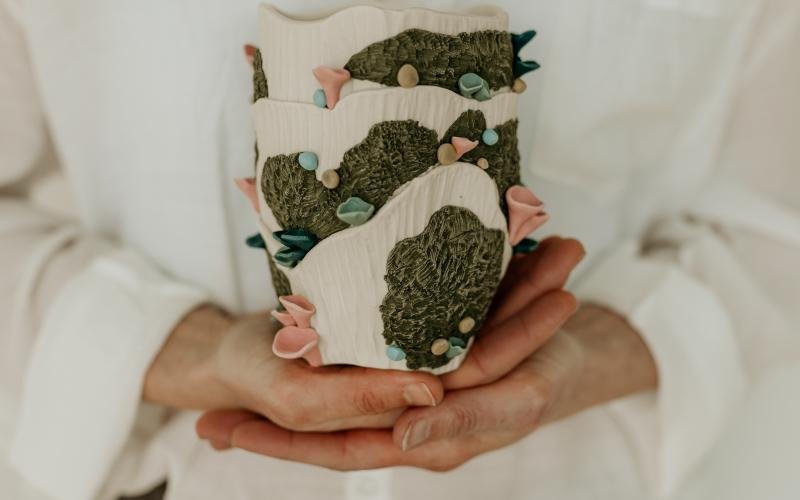
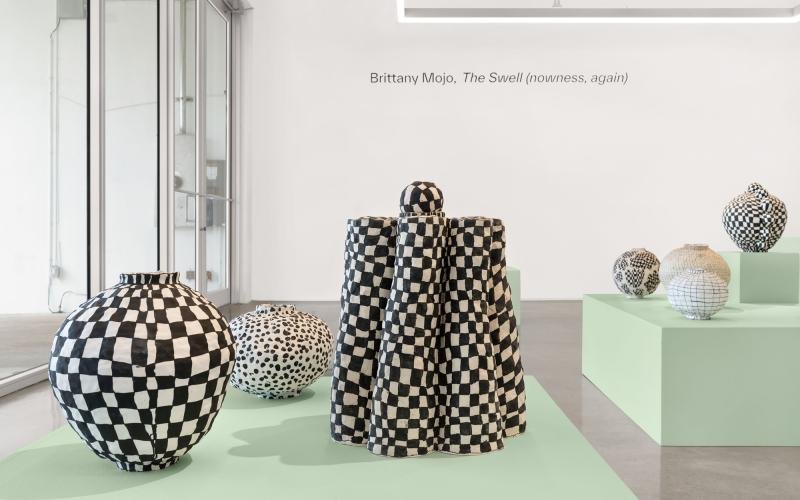
Brittany Mojo, The Swell (nowness again), installation at Mindy Solomon Gallery, 2023. Photo courtesy of Mindy Solomon gallery.
Accumulative Time
By Brittany Mojo
And then the unthinkable happened.

My father passed away suddenly during my second semester, which drastically impacted the way I thought about my work – what I was making and why I was making it. Coming from a thinking-through-making experience at CSULB, it seemed the exact opposite was true at UCLA. Everyone was reading Derrida, Solnit, and Lacan – gathering ideas and metaphors as the first step to realizing a piece. I, however, was in mourning, and I needed to rely on my practice to offer respite and on literature to offer answers to questions that have plagued humanity since the beginning of consciousness. Mourning became my life’s work. It was tragically difficult and incredibly lonely.
Read More
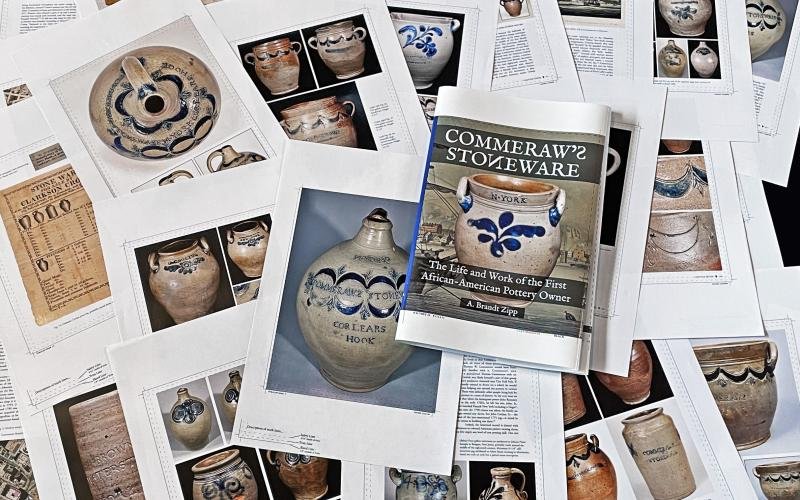
Pages from Commeraw’s Stoneware – The Life and Work of the First African-American Pottery Owner, By Brandt Zipp.
Book Review: Commeraw’s Stoneware – The Life and Work of the First African-American Pottery Owner
By Jack Troy
This cinematic volume will be steep reading terrain for all but the most empathetic, relentlessly inquisitive seekers of pottery forensics. Lacking such scholarship, crocks and jugs sit mute – defying us to imagine their origins: that synapse between touch and its evidence. To date, we have no comparable documentation of a single potter’s life.
Read More
Sponsored Content
Sponsored Content
By Adamah Art Studios
It was during Steven’s Throwing Gestural Forms workshop that Katie, an entrepreneur and busy mother of two, learned about The Journey Workshop. "It’s a big investment, not just financially but also in time," she shared. "I knew from my previous experience of being in Steven’s classes what a wonderful teacher he is, but I wasn’t sure I would be able to follow through with this time commitment. I reached out to some people who I knew had previously participated in The Journey to learn more. Many of them were already signed up to do it again, which spoke volumes about the kind of growth they found from the experience."
Read More
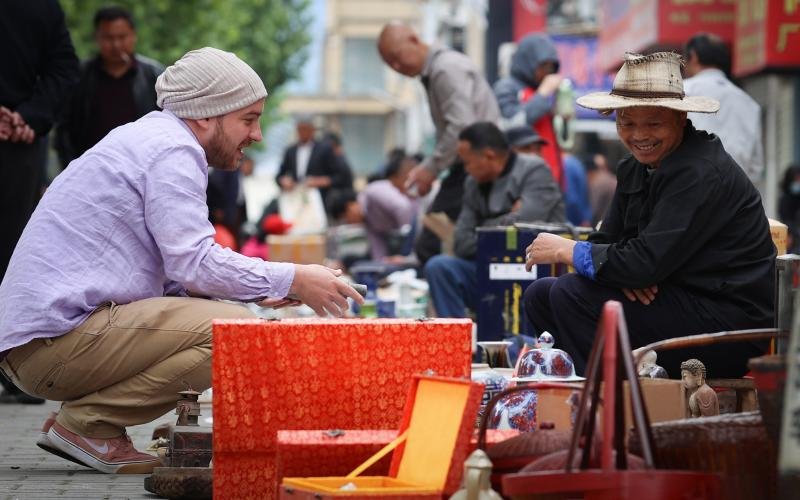
Nick Vest buying two objects at the Ghost Market  to start work with. Photo by Wu Fan
Gathering What’s Needed: 400,000 Potential Collaborators
By Nick Vest
I didn’t mean to come here; I "knew" about Jingdezhen, of course, about blue and white pots and porcelain, but I’ve never been a person in love with clay in THAT way. I fall into the "clay is a material" camp of ceramic artists and thought that Jingdezhen was a place for people more in the "clay is life from the earth" wing. I was wrong, and coming here was the best thing I’ve ever meant not to do.
Read More
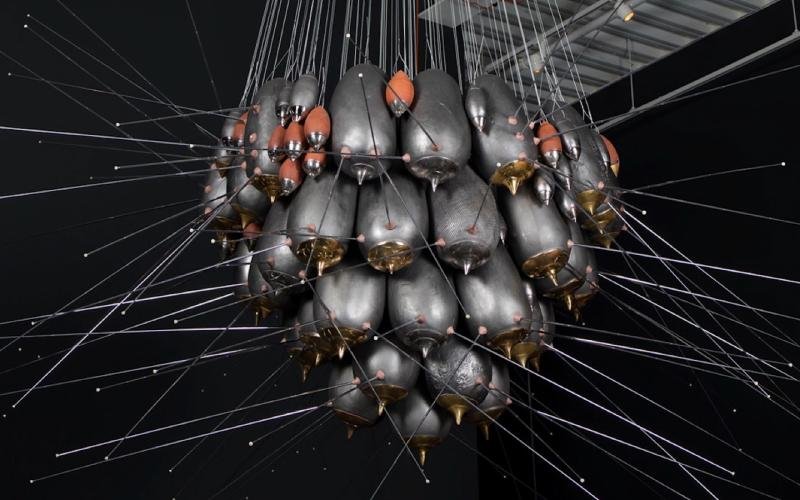
Simone Leigh, Trophallaxis, 2008-2017. Collection Pérez Art Museum Miami. Copyright: © Simone Leigh. Photo: Farzad Owrang.
The Dynamics of Transfer
By Chenoa Baker
Trophallaxis focuses on the breast as a site of labor. In that, there is the juxtaposition of comfort and discomfort, familiar and unfamiliar: the cracking nipples and boot prints showcase bodily violence and the physical impact of breastfeeding. Fecund breasts with gold-plated areoles and nipples, constructed from terracotta, porcelain, antennae, and epoxy, suspending from the ceiling.
Read More
Back to Issue

Author Bio

David Packer

English-born David Packer has lived in the United States since 1983. Locations include Miami, Washington, DC, and New York City. He graduated with an MFA from Florida State University in 1994. He has curated shows at the New York Spring Break Art Fair (three times) and at Eighty-One Essex. Residencies include MacDowell in Peterborough, New Hampshire; Yaddo in Saratoga Springs, New York; Kohler in Sheboygan, Wisconsin; AIR Vallauris in France; and Youkobu in Japan. Select exhibitions include Exit Art and the Garth Clark Gallery in New York; the Navta Schultz Gallery in Chicago; as well as shows in Morocco, France, and Japan. Packer has received two Fulbright awards to conduct research in Morocco, living in Fez, Tangier, Marrakech, and Essaouira. In 2019, he published a book about Moroccan ceramics, The Earth Has Three Colors.

Book

CONTACT  |  NEWSLETTER SIGNUP  |  COPYRIGHT © 2026 STUDIO POTTER  |  SITE DESIGN

Design by Adaptive Theme

Member Log in

  • Create new account
  • Reset your password
Forgot your password?
Continue as Guest
Become a Member
Library IP Login