Book Review: Chris Staley’s Teaching Art & Life
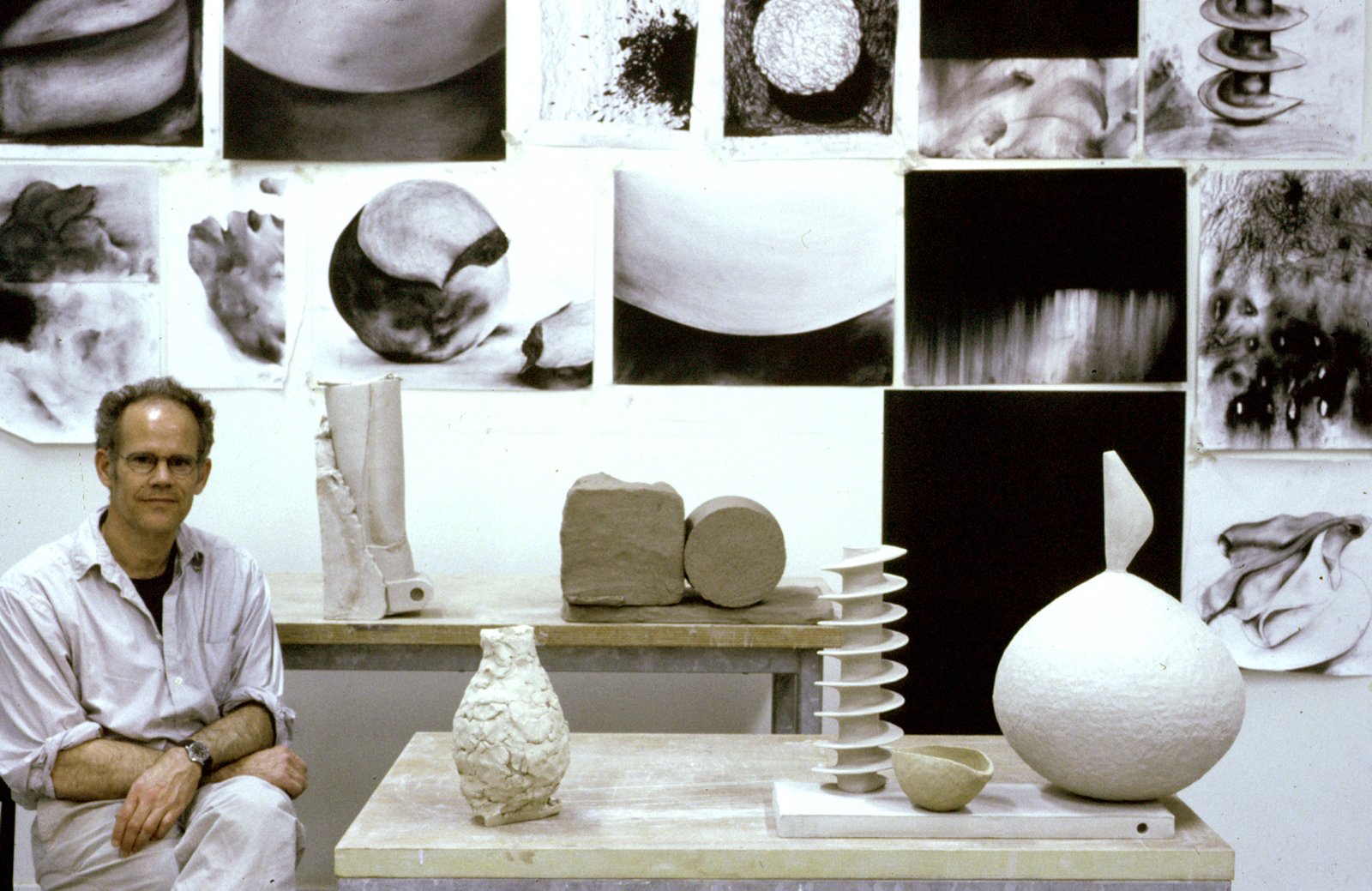
Chris Staley taught ceramics at Penn State University for 38 years while also maintaining a robust schedule of gallery exhibitions, international travel, visiting every major craft school in the US, as well as lecturing at a variety of venues worldwide. As University Laureate during the 2012–23 academic year, he made presentations at each of Pennsylvania’s 16 State Universities, resulting in a series of short YouTube videos based on his class “Teaching Art and Life.”
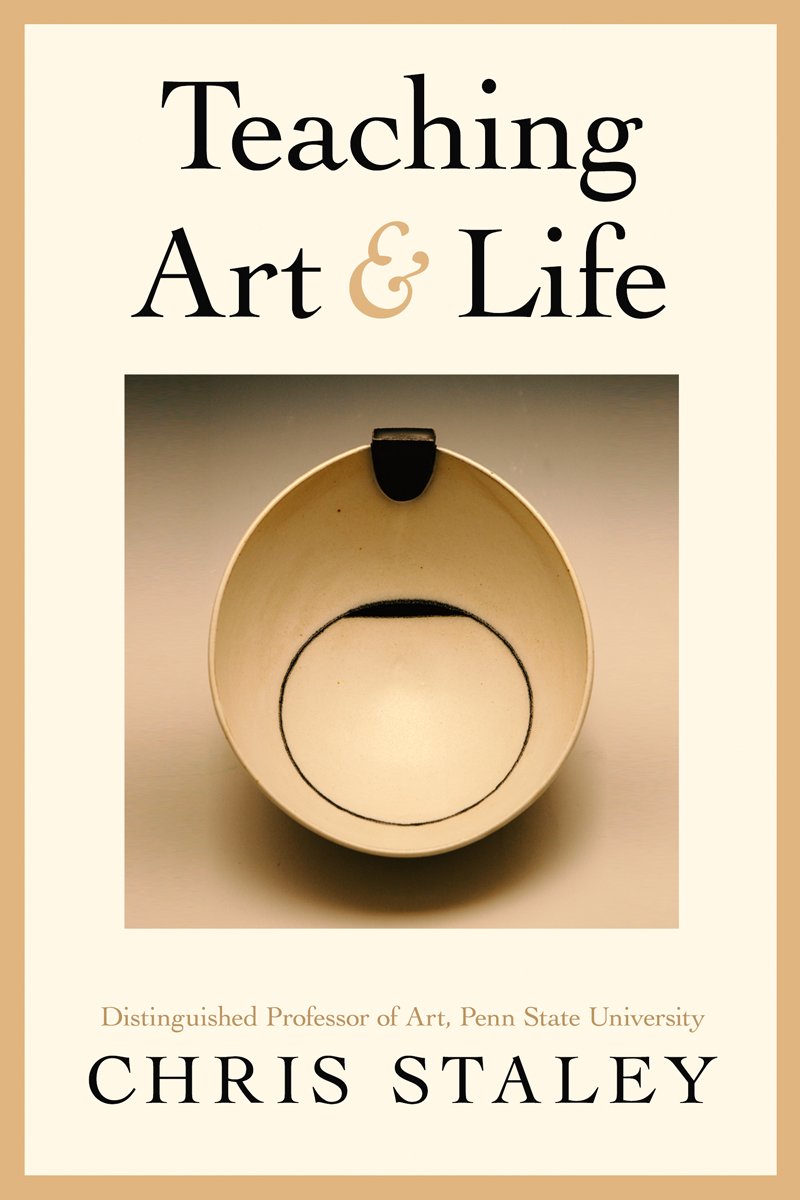
Chris Staley’s prodigious and varied pottery output for forty-plus years authenticates the commentary he offers to learners of all levels. The student-teacher synapse, the reciprocity of learning and teaching, is the core of his book, Teaching Art and Life.
Ceramics is how-to heaven, but why gets short shrift. Staley is a free-range reader with particular interest in value-centered aspects of ceramic practice. Some of his first readings were M. C. Richards’ Centering and The Crossing Point, in which she urges us to look the creative process in the eye, take ownership of what we make, and become curious about curiosity itself - that magical component of some of our best work. While at Alfred, he worked for Robert Turner, one of the most spiritual, thoughtful faculty members, whose mentoring underlies Staley’s patient classroom manner.
A 209-page book with 40 chapters is an ode to cogency. Here are some of the chapters: First Class, Listening, Critiques, Creativity, Doubt, Failure, Competition, Reading, Pottery, Quality, Grades, Metaphors, Assignments, Wisdom, Motivation, Risk, Humility, Curiosity, Touch, Emotional Intelligence, Ego, Empathy, and Joys and Sorrows.
The author’s background in sports predisposed him to the kinetic challenges and rewards of working in clay. “As a young boy, I often played outdoors and made things with dirt and sticks - I struggled sitting behind a desk at school. I knew very early that to survive spiritually I had to keep creating with my hands. “When students express their thoughts and feelings with clay, they feel alive because their whole being is at play; [their] hands, heart and brain become fully engaged.” Then he says, “Like training a wild horse, the clay teaches the potter to be tenacious, patient, perceptive, gentle, forceful, resourceful, observant, flexible, and curious….Acquiring technical skills while personalizing the design of a cup is not an easy task….It’s exactly this fiery crucible of learning that both hand skills and creativity make pottery such a unique and challenging subject to teach…The process of learning to make self-expressive personal pots can be circuitous and daunting…. Students are empowered when the pots they make are an extension of who they are… In today’s virtual world… the tactility of making one’s thoughts and feelings into a pot can be self-affirming.”
He continues, “Students whose teachers care about them have a tailwind toward doing their best work. In his chapter, “Caring,” Staley writes, “I have found the most caring gesture I can give a student is my individual attention.” When asked what they valued most about their education, a graduating senior said, “I really valued that time we went for tea, and you asked me questions and listened to my thoughts.” He concludes this chapter: “In the purest sense, when we give of ourselves to students, we want what is best for [them] and nothing more.”
This book is a pantry of thoughtful reverberations worthy of multiple readings. Chris Staley’s encounters with students and his note-taking skills keep refreshing the text. Readers will find evidence of Henry James’s observation, “An artist is one on whom nothing is lost.”