Shopping cart 0 items
Donate
Member Login

Search form

Share
Login
Home
  • About
    • Mission
    • History
    • Masthead
    • Board of Directors
    • Contact
    • Privacy Notice
    • FAQ
    • Internships
  • Articles
    • Current Articles
    • Collections
      • Interviews
      • Narrative
      • History
      • Technology
      • Criticism
      • Other
    • Print Archive
    • Write for SP
  • Announcements
    • General
    • Classified
    • Events
    • Newsletter
  • Become a Member
  • Grants for Apprenticeships
  • Donate
    • Underwriting
    • Donate
    • Partners
  • Store
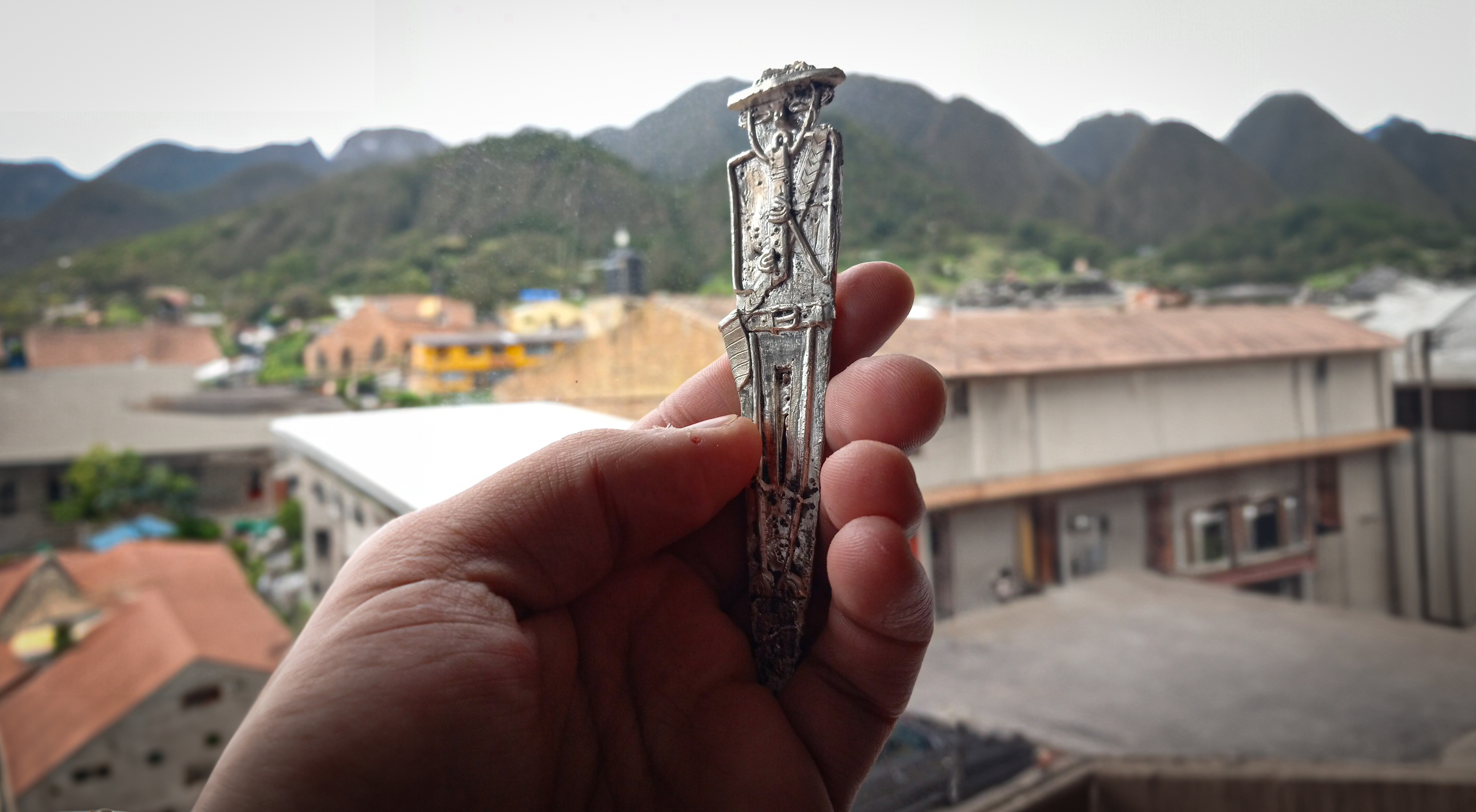
Tunjo are gold, gold alloy, copper, or silver figures made with the intention of becoming offerings.

Reappearing Practices

Mario A Mutis R

The global voice of the Americas has been represented mostly, if not always, by a dominant Westernized society. Since the Spanish arrival, the consequence of such an encounter as it was in 1492 has left many scars on the land and the people, both physical and psychological. Since then, the indigenous people of the Americas have shown resilience and resistance to disappearing physically, spiritually, and mentally.

Dreadfully, colonialism has a strong hold on the narrative of our lives. The Colombian people see it, hear it, feel it, and, without thinking, perpetuate it. Standards of beauty, the practice of religion, the role of art in society, and how we perceive people’s actions to classify them as either backward or progressive are all funneled through the lens of the colonial mind. In Colombia, as well as most of the Americas, western ideologies and practices have been the norm for hundreds of years. This has led to the misconception that indigenous people and our culture are either stagnant in time or frozen in the mystical mythology of the noble savage.

I contend that history does not follow a straight line but is a large tapestry of interwoven threads, overlapping designs, complex craftsmanship, and, most importantly, a work in progress. The importance of pursuing this artistic project has directly to do with combating the ill legacies we inherited from the past. Such as the result of King Charles III of Spain banning the practice of our native language in the year 1770. Two hundred and twenty-one years later, this ban was lifted in the new Colombian Constitution of 1991. The rewriting of the constitution now gives Indigenous people autonomous rights to education, religion, and government. Two years after I was born, my native language became legal. Due to this ban lasting more than two centuries, my Muysca[1] language had become officially extinct, according to scholars, books, and, of course, Wikipedia. However, the language remains alive within us, in our names, the territory we live in, and the memory of our elders. Muysccubun[2] means the "language of people." It is not only the language that we are rebuilding and maintaining orally but a world view and the record of our presence.
...
Read more

More from this issue

July 2024

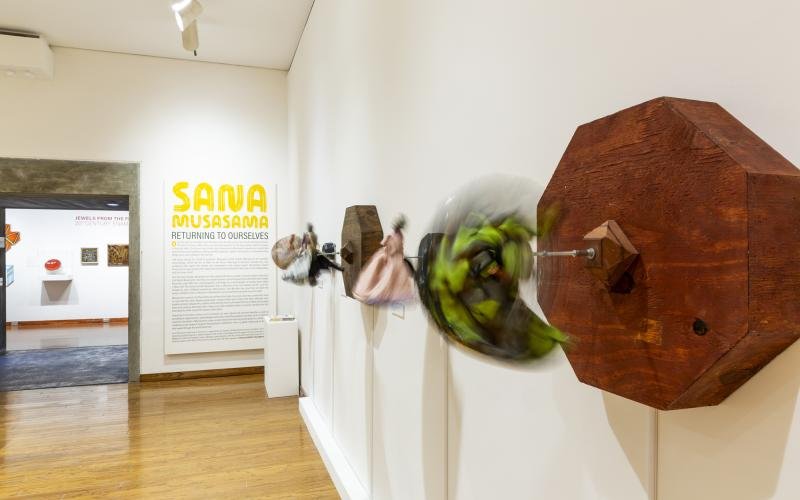
A Conversation with Sana Musasama (Part 2)
By Everson Museum of Art
You've all heard Sana speak so deeply, confidently, and movingly; it's been interesting over the last couple of days to see how nervous you get, Sana. About speaking and presenting, you're one of the most powerful presenters and speakers that I've ever experienced, and I hope that that carries through with everyone here. So, I hope that you can all be inspired by overcoming your own nervousness and know that people who are powerful human beings still have that nervousness.
Read More
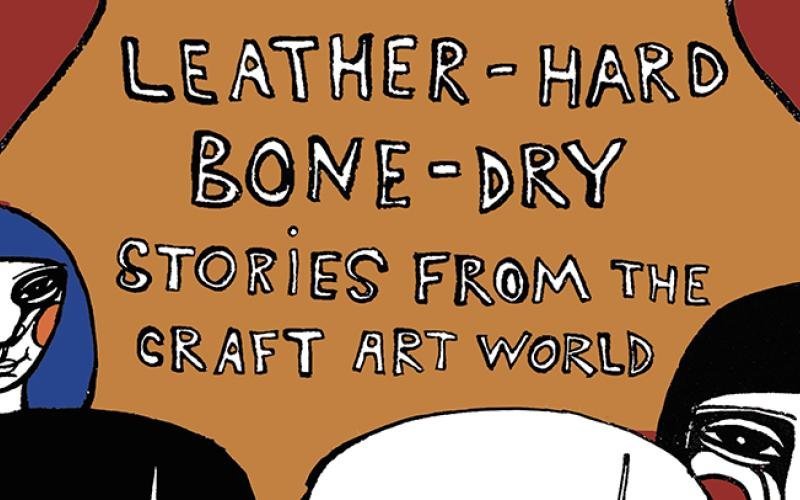
Bone Dry Leather Hard – Stories from the Craft Art World (Part One)
By Richard Nickel
In the coming four months, Studio Potter will release a comic series from this new anthology. This month, we feature the work of Janina Myronova, Sydnie Jimenez, and Amber Pierce.
Read More
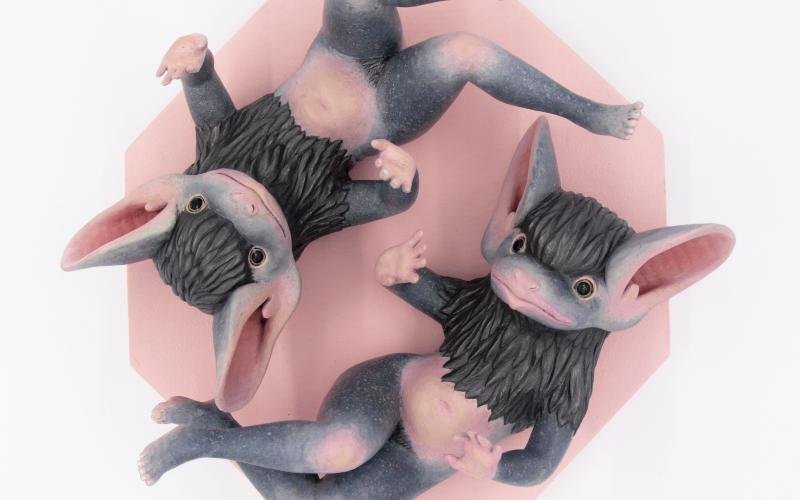
G.V. Kelley, Moonlit Dreamers (en Rose), Midrange ceramic, 2024, underglaze, glaze, graphite, mixed media, 11.25”x13”x6”
Unregulated: Exploring Identity, Inequality, and Advocacy Through Clay
By Debbie Quick
CJ Carter’s work deftly blends the language of architecture with the human form to interrogate societal constructs of strength, beauty, and gender. Carter's sculptures serve as powerful symbols of resilience and defiance, pushing back against the rigid expectations placed upon marginalized individuals. Similarly, Jess Cheng explores themes of nurture, suffering, and regeneration, offering a poignant reflection on the human condition and the capacity for growth amidst adversity.

Nicki Green's sculptures and ritual objects delve into the preservation of history and the aesthetics of otherness, inviting viewers to reexamine their perceptions of identity and belonging. GV Kelley's chimeric creatures, with their hybrid forms and fluid identities, challenge the binaries that often govern our understanding of gender and identity. Through their work, Kelley initiates a crucial dialogue about the complexities of the human experience and the need for greater acceptance and understanding.
Read More
Back to Issue

Author Bio

Mario A Mutis R

Mario was born in 1989 in Bogota, Colombia. He earned his BFA in Interdisciplinary-Sculpture at the Maryland Institute College of Art in 2012 and his MFA in Ceramics at the University of Florida in 2015. He is currently teaching as an assistant professor at Santa Fe College in Gainesville, Florida. Mario is a practicing interdisciplinary artist who creates works related to his reality as an indigenous Muysca/Pastos of Colombia.

artist website

CONTACT  |  NEWSLETTER SIGNUP  |  COPYRIGHT © 2026 STUDIO POTTER  |  SITE DESIGN

Design by Adaptive Theme

Member Log in

  • Create new account
  • Reset your password
Forgot your password?
Continue as Guest
Become a Member
Library IP Login