Shopping cart 0 items
Donate
Member Login

Search form

Share
Login
Home
  • About
    • Mission
    • History
    • Masthead
    • Board of Directors
    • Contact
    • Privacy Notice
    • FAQ
    • Internships
  • Articles
    • Current Articles
    • Collections
      • Interviews
      • Narrative
      • History
      • Technology
      • Criticism
      • Other
    • Print Archive
    • Write for SP
  • Announcements
    • General
    • Classified
    • Events
    • Newsletter
  • Become a Member
  • Grants for Apprenticeships
  • Donate
    • Underwriting
    • Donate
    • Partners
  • Store
"Bank VI" filled with longleaf pine seeds, and buried in the subtropical forest of Louisiana (traditional lands of the Chahta Yakni- Choctaw peoples). Collaborators: Geren Huertin, Zach Fox, and Savannah Morales. Photo courtesy of Geren Huertin.

Seeding Hope for the Future

Rachael Marne Jones

Imagine the slow but steady crunch and thud, crunch and thud of a shovel wedging its way into the earth. Deep breathing marries the rhythmic movement of soil as a mound begins to form beside the hollow negative below the surface. Not too far from the human earthmover and their growing mound and hollow, a curious white rock sits, waiting to be nestled into the cavity, waiting to be tucked under the reposited dirt, patiently holding the cargo within its double walls. This hand-crafted ceramic container, akin to a time capsule, was engineered to sustain the chosen seeds of local communities for as long as the seeds’ RNA might allow. When buried below permafrost and sealed with the ceramic screw top-cap and beeswax, the vessel insulates the seeds from liquid and light while providing constant humidity to postpone the germination process. This potentially extends the dormancy period, lulling the seeds into a deep sleep far into the future. When buried in situ (in place of origin), where the yielding plants currently thrive, the seed bank vessels act as both local and global indicators of the plant’s cultural and ecological significance to the region. What might the land look like ten, twenty, one hundred, or even a thousand years from now? How might the flora and fauna change, and what can this small act of reverence tell future generations about the quickly changing landscapes and how we relate to them? What gifts can we give to future generations in times of climate emergency? How can we honor the symbiotic relationship between humankind, the land, and our non-human kin that has been practiced by indigenous cultures since time immemorial?

Time and how we relate to the land were the primary inspirations for The Seed Bank Project. The process of saving seeds – a sacred act performed by many cultures around the world – has been co-opted by large-scale agriculture within the last century. This shift in control, as well as agency in the choice of crops, land use, and ramifications of agricultural pollutants, has narrowed the potential for an intimate connection with forms of nourishment, disproportionately affecting communities of color and indigenous peoples who were and are currently being displaced by colonialism and the expansive effects of climate change.
...
Read more

More from this issue

April 2023

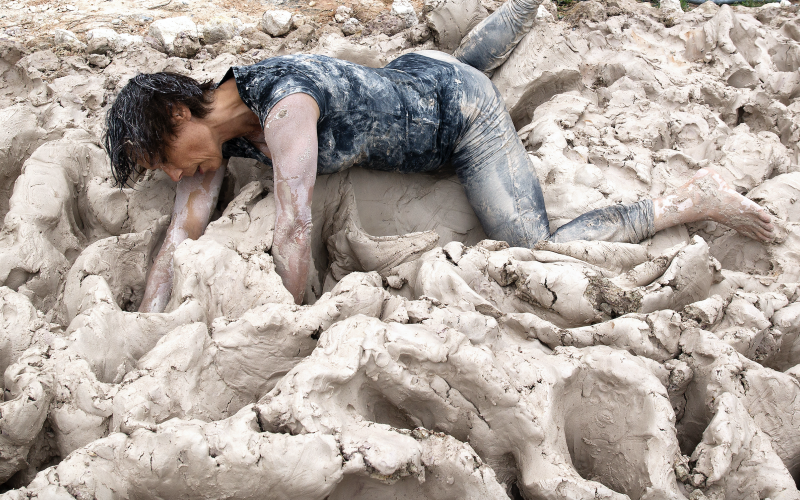
Alexandra Engelfriet, "Mixed Blood," photo courtesy of Kathy Irwin.
Earth, Wind, and Fire
By Alexandra Engelfriet
"In the clay, I surrender to something bigger than myself. I search for a correspondence or even a merging with the material when my body becomes clay and clay a body, and the boundary between inside and outside, body and mind, dissolves." This month's FREE article!
Read More
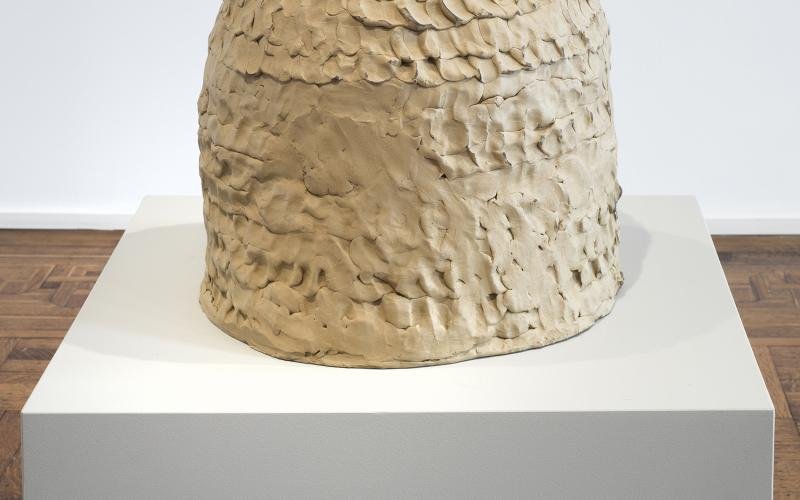
Simone Leigh, "Jug," 2014. Photo courtesy Tilton Gallery, New York.
Evidence of Things Unseen
By Chenoa Baker
What I learned while centering the clay and obsessing over the clay-to-water ratio in class for weeks is that clay particles are like platelets; water and earth dance around and are compressed in the process of sculpting. While the goal is cohesion, it starts as a suspension. White supremacist capitalist patriarchy, not to oversimplify it, is in suspension, as it is multiple different ideologies pulling apart rather than binding together. I learned this profound lesson from Simone Leigh’s "Jug" (2014).
Read More
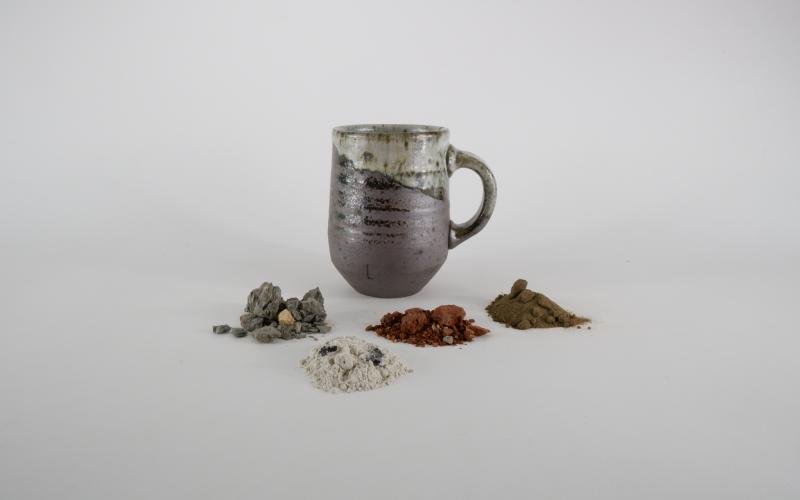
The four local materials it took to make this mug, no industrial materials required.
From Here – Regionally Specific Ceramics
By David McMillan
Making pots from the same earth that grows our food is important; I want my work to connect the user to the place that sustains them.
Read More
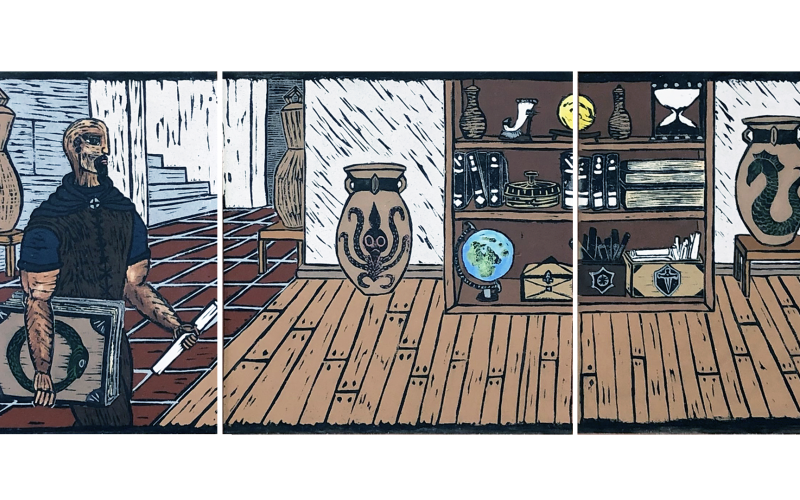
Paul Wandless, "Haymens Studio," Clay Monoprint, triptych.
The Threads That Tie Ideas Together
By Keith Luebke (he/him/his)
For those interested in building a sustainable society rooted in freedom and justice – issues that seem important to most of the potters I have known – we need to understand the threads that tie ideas together. We are at a moment in history when many disciplines must make choices, articulate a collective sense of concern, and consider the available paths toward voicing and acting on those concerns.
Read More
Back to Issue

Author Bio

Rachael Marne Jones

Rachael Marne is a multi-disciplinary ceramic artist and writer whose artistic practice and research interests have ignited connections across the globe. Her primary interests are solastalgia, ecological awareness, and the inherent archaeological quality of clay to tell stories through form and material. She has completed residencies at the Red Lodge Clay Center, Medalta International Artists in Residence, and the Cub Creek Foundation, as well as being the first artist fellow of the Global Sustainability Fellows Program of the Sustainability Laboratory. She is currently a visiting assistant professor at St. Lawrence University in Canton, New York.

www.rachaelmarnejones.com

CONTACT  |  NEWSLETTER SIGNUP  |  COPYRIGHT © 2026 STUDIO POTTER  |  SITE DESIGN

Design by Adaptive Theme

Member Log in

  • Create new account
  • Reset your password
Forgot your password?
Continue as Guest
Become a Member
Library IP Login