Shopping cart 0 items
Donate
Member Login

Search form

Share
Login
Home
  • About
    • Mission
    • History
    • Masthead
    • Board of Directors
    • Contact
    • Privacy Notice
    • FAQ
    • Internships
  • Articles
    • Current Articles
    • Collections
      • Interviews
      • Narrative
      • History
      • Technology
      • Criticism
      • Other
    • Print Archive
    • Write for SP
  • Announcements
    • General
    • Classified
    • Events
    • Newsletter
  • Become a Member
  • Grants for Apprenticeships
  • Donate
    • Underwriting
    • Donate
    • Partners
  • Store
Graphic by Jinhee Kwak, who may be found on Instagram @jinxartz.

Pinch Pot Meditations

Christopher Salas

"Can I find my way with clay to community and healing?" 

– M.C. Richards in Paulus Berensohn’s Finding One’s Way With Clay

When I first started to work with clay, the majority of my concern was with technical skill. To make strong work, it seemed what was most important was to understand how best to manipulate the clay. My interest in clay, like many, started with the wheel. Experienced potters at my community studio would make great pots with ease. I struggled to make pots and, when they were finished, I found they didn’t speak to who I was. While happy with having work make it through the entire process, I struggled with making work that is connected to my voice. 

Frank Tomizuka, a potter at Romero House Potters in Tucson, Arizona, where I worked, one day brought in the book Finding One’s Way With Clay by Paulus Berensohn. In this book, Berensohn speaks to the spirit of making, providing prompts that will later stimulate an individual’s creativity.  He encourages readers to build pinch pots, speaking to the quiet little pace which is required to make. The book resonated with me deeply. 

My mind began to associate abstract ideas with the process of making. I was set on a path to question conventions within ceramics. Making pinch pots introduced an entirely unfamiliar sensation of building. It requires precision and confidence to direct the clay in a meaningful way, but all of that work can be lost if one is not mindful of what the clay will allow. 

Where I once considered pinch pots as being unrefined, I now developed a keener sense of form and process. Berensohn asked readers to form a pot out of a single ball of clay. Quickly, the task presented as unruly and difficult to manage. It is a challenge to steadily develop and articulate the form while asking the clay to maintain its shape. 

Paul S. Briggs takes this restriction as both a philosophical and a technical challenge. Looking to push the limit of what one can build from a single ball of clay, Briggs creates highly refined objects with complex parts. These features are made by careful consideration, attention, and control of the clay. He spends time slowly directing the clay, thick and thin, to areas which will later be used to become something entirely different. He spends time making sure every inch is considered and put in its right place.
...
Read more

More from this issue

September 2021

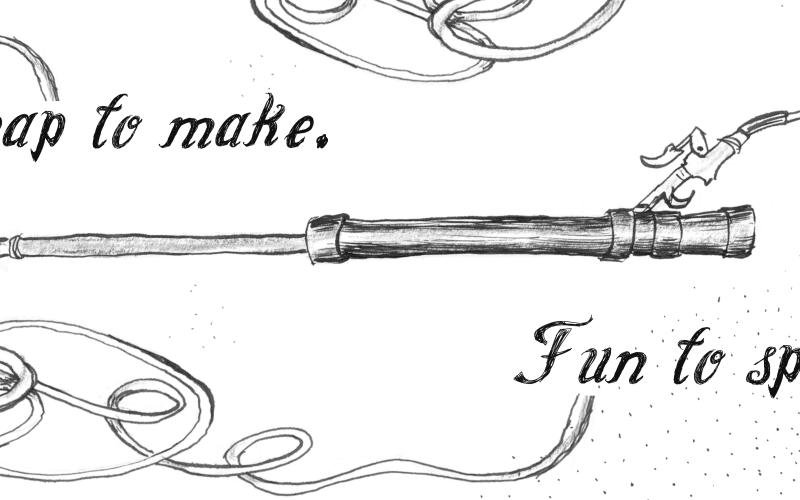
Cheap to Make. Fun to Spray.
By Amelia Butcher
Do you want to use an O’Brien? Please try it. Tell us how it is for you and if you make improvements. It’s a team sport, rah rah. It gives everyone something to do: one person to pull the brick, one person to spray, one to load the next shot, two vampires to vamp the dampers in and out.
Read More
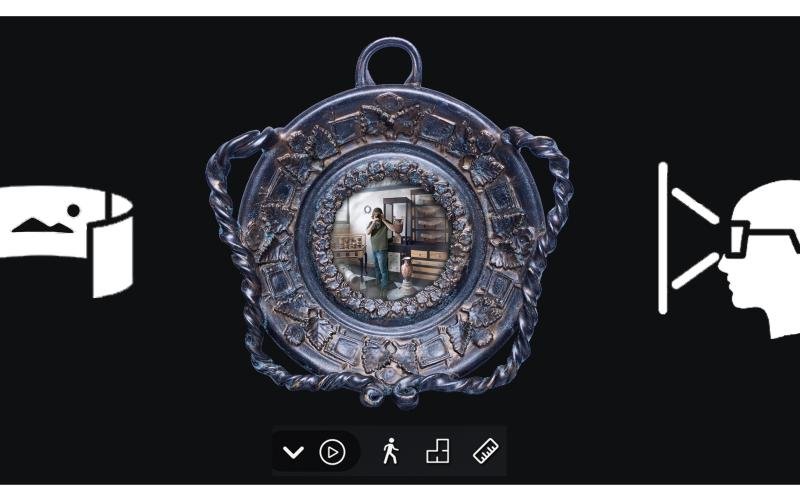
Materiality and the Metaverse
By Brad Menninga
When my sense of depersonalization is at its strongest, I feel as though I have become virtual and dreamlike myself and have lost my presence in real time and space.
Read More
Presence Matters
By Meredith McGriff
I hope, now, that my ongoing research and future publications will highlight this model of community building both within and beyond the contemporary art world, in a way that could serve society at large, helping researchers in the humanities build a better understanding of how and why people choose to work together, and more importantly, how they do so productively.
Read More
Tacos, Death, and Old English
By Andrew Rivera
I’m speaking for myself; [Chicano] resonates with me and gives me a sense of belonging I couldn’t find before.
Read More
Back to Issue

Author Bio

Christopher Salas

Chris Salas (they/them) is a queer, non-binary, Chicanx ceramics artist and educator who lives and works in South East Michigan. Chris makes sculptural forms and vessels that question traditional functionality as well as conventional ideas of beauty through process-oriented work that focuses on surface, tactility, and imperfection. Chris has followed a non-traditional ceramics education route. 
They started out in community ceramics studios like Romero House Potters and Tucson Clay Co-op in Tucson, Arizona. Chris continued on to workshops at Penland School of Crafts in North Carolina and Arrowmont School of Arts and Crafts in Tennessee. They most recently completed the New Institute for Ceramics (MN NICE) program at Northern Clay Center in Minneapolis, Minnesota. Chris will begin an MFA program at Cranbrook Academy of Art in the Fall of 2021. You can check out Chris’ work on Instagram 

Instagram

CONTACT  |  NEWSLETTER SIGNUP  |  COPYRIGHT © 2026 STUDIO POTTER  |  SITE DESIGN

Design by Adaptive Theme

Member Log in

  • Create new account
  • Reset your password
Forgot your password?
Continue as Guest
Become a Member
Library IP Login