The Substance of Time
Time is supposed to disappear into the object. The vessel absorbs the hours until duration becomes invisible. The finished surface conceals the waiting, repetition, failure, obsession, and accumulated decisions required to make it exist. The work of art, Together in Spirit, refuses that disappearance. It places two objects beside one another whose value is inseparable from duration: a whisky given fifty years to become cultural capital and a ceramic project that consumed nearly 1,000 days in pursuit of its final form. One ages by being left largely undisturbed. The other matures through relentless innovation.
Perhaps the radical proposition of Together in Spirit is that time is distilled within it. Failure is there. Repetition is there. Waiting is there. So are decisions made hundreds of days apart that ultimately occupy the same few inches of porcelain. Fifty years and 1,000 days cannot be seen, but both are being offered to us as material evidence. Porcelain artist Peter Pincus describes the project as a “once-in-a-lifetime opportunity to pursue excellence.” For Laurie Pincus, his wife, “it was an opportunity to find new spaces and processes in our studio and business practices that I felt ownership and a sense of protection over.”
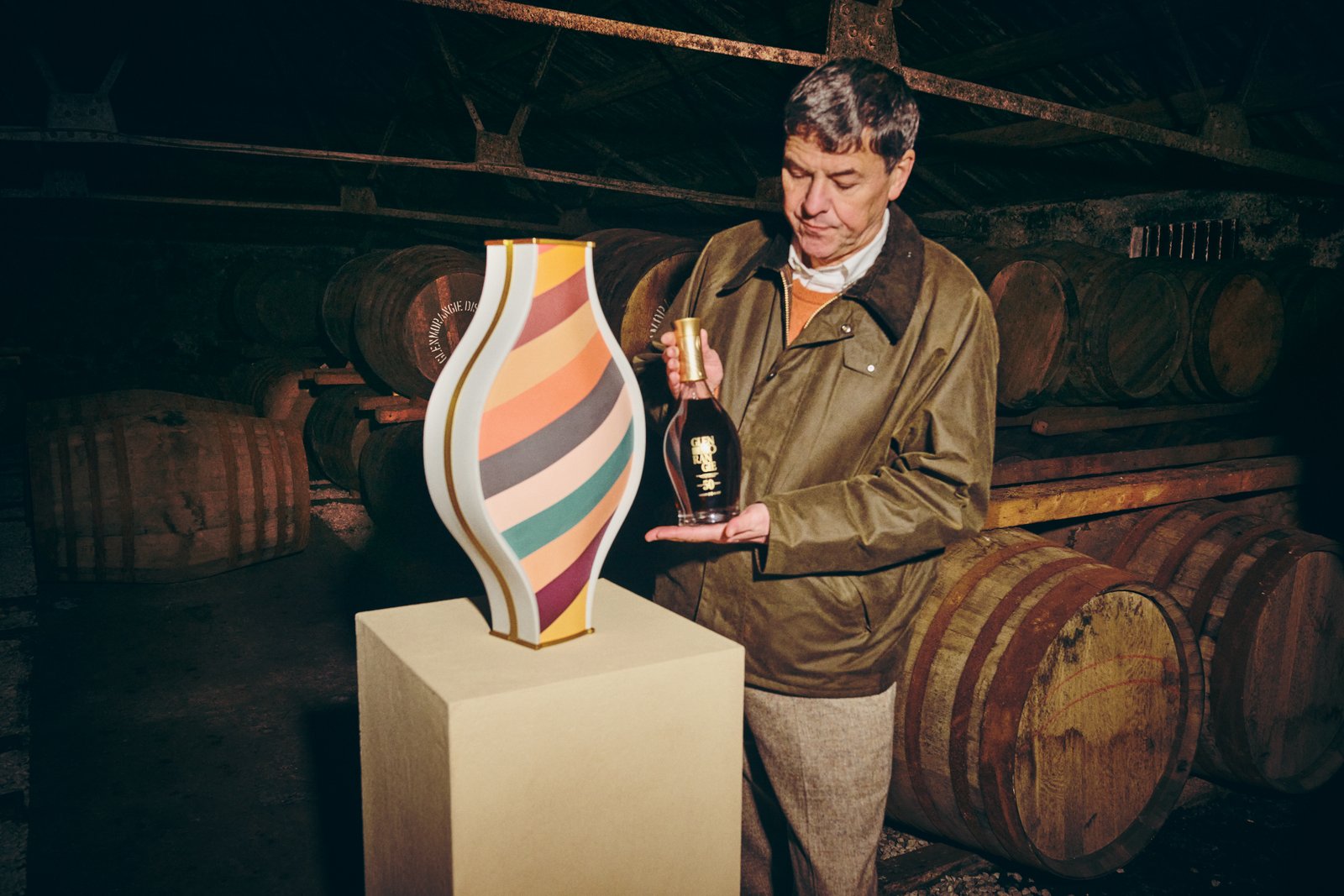
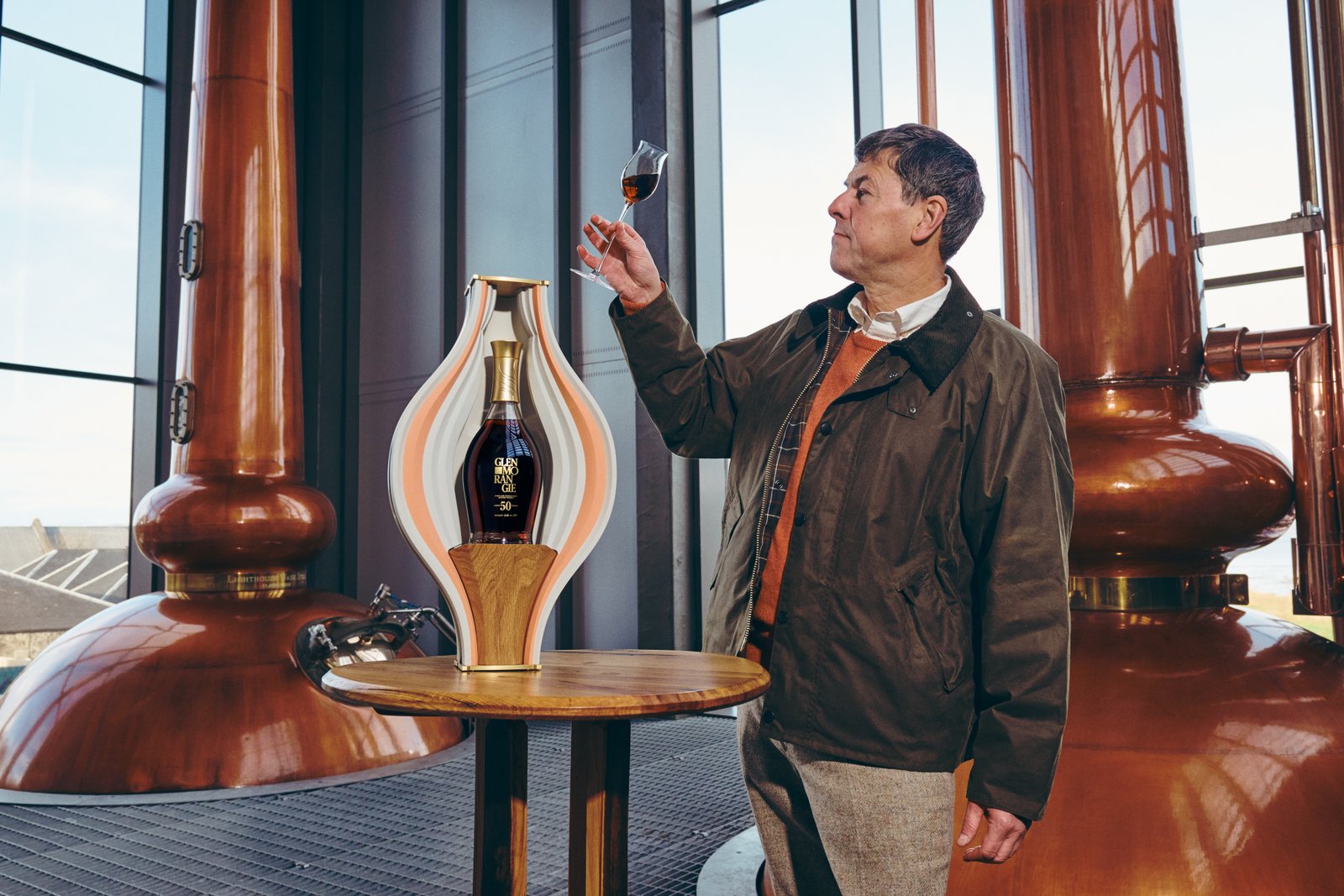
Glenmorangie has been producing single malt whisky in the Scottish Highlands since 1843, giving the distillery more than 180 years of continuous history to draw upon. A fifty-year-old single malt represents an unusually long interval within that history – both within the history of the individual distillery and the broader history of fifty-year-old distilled spirits. The liquid protected by the Pincuses vessels therefore began its transformation in another era. As Peter reflects, “Dr. Bill Lumsden – the director of distilling, whisky creation, and whisky stocks for Glenmorangie – refers to it as a bygone era defined uniquely by the floor malting process that embeds a distinctly historic character to the liquid.” During those preceding decades, generations of distillery workers passed through Glenmorangie, ownership and technologies changed, and the culture surrounding single malt Scotch evolved around the casks. The people who first set that spirit aside could not fully know the cultural world into which it would eventually emerge, much less anticipate that its final presentation would involve 149 individually patterned porcelain vessels created by Pincuses. In this sense, the fifty-year whisky functions as material continuity, carrying decisions made decades apart into the present.
For us studio potters, the whisky functions as the catalyst for an inquiry centered on the art.
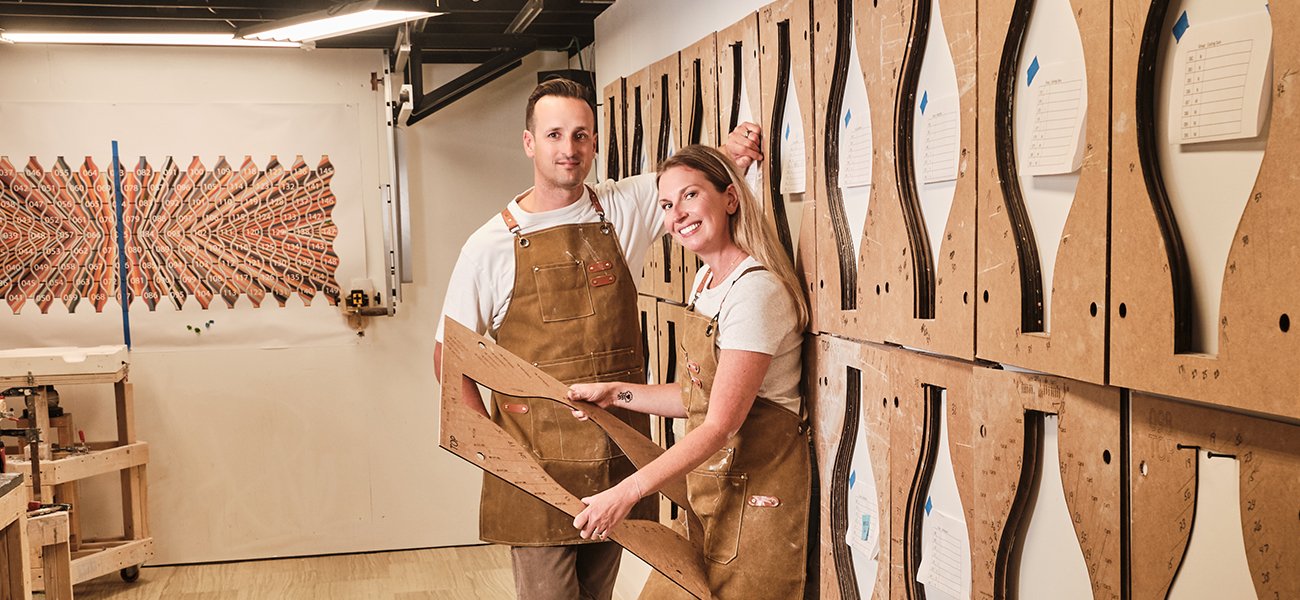
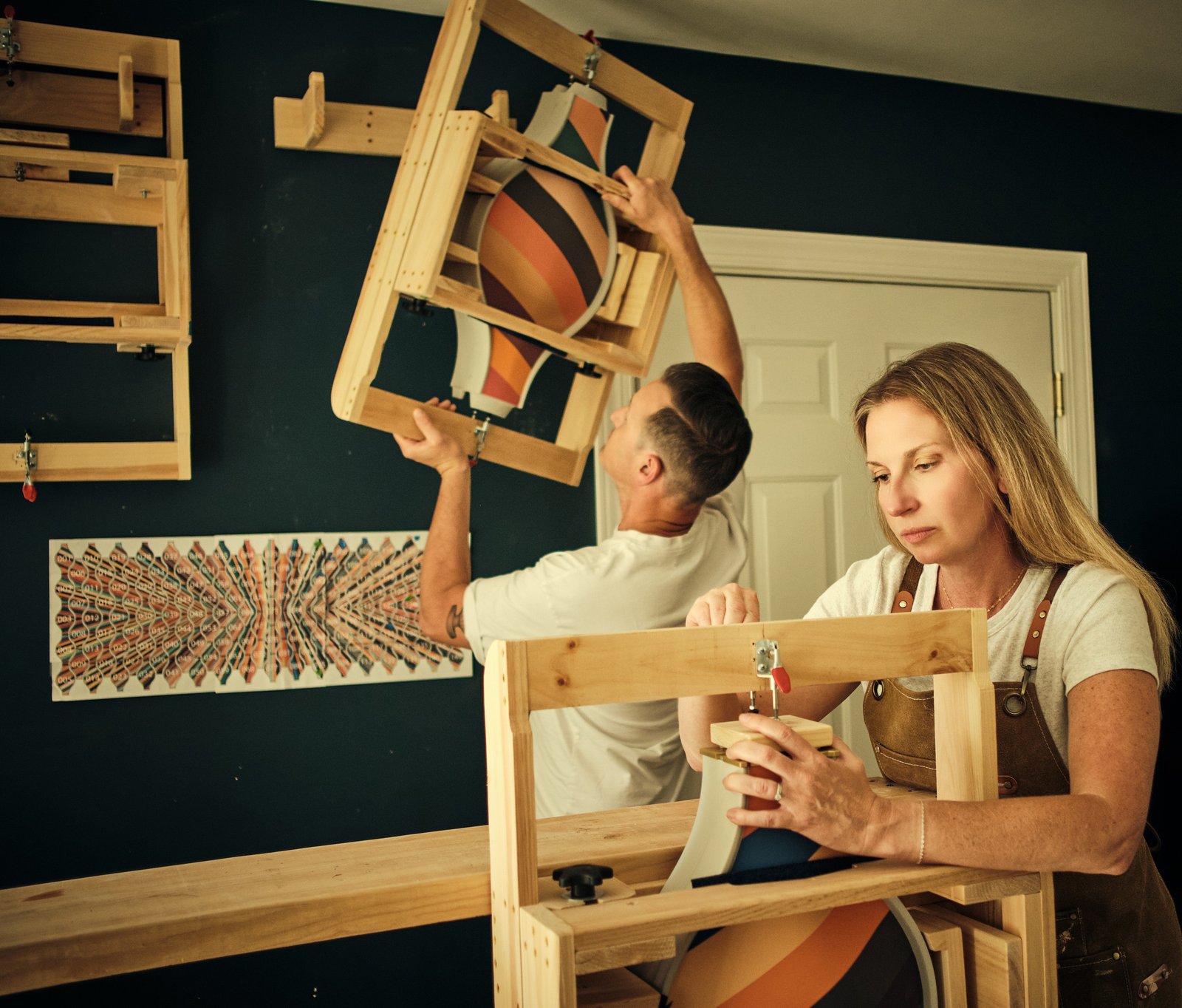 The Pincuses contribution took roughly 1000 days, 149 vessels, 50 custom pigments, an evolving system of molds, countless failures, and a studio transformed by the demands of a project that was considerably larger than anything they had previously attempted.
Commissioned by Glenmorangie to create vessels for its fifty-year-old single malt, the Pincuses produced Together in Spirit, a group of individually patterned porcelain forms that can be assembled into a larger tessellated composition. For all intents and purposes, it's a single museum-quality installation, deeply rooted in the identity of an individual pot.
For more than three years, the Pincuses asked porcelain to give form to an experience measured in decades. Peter and Laurie eventually stopped thinking about the project’s extraordinary financial value and began thinking instead about “time as currency,” a shift that allowed them to consider everyone whose labor had accumulated across the whisky's history: the distillery workers, the makers, the studio team, their family, and the decades of decisions that preceded their arrival. Time is never accumulated by history alone; the 1,000 days held within Together in Spirit are also the accumulated time of many people: hours of testing, casting, sanding, refining, rejecting, remaking, organizing, and solving problems together.
One of the more compelling questions raised by the Pincuses Together in Spirit is deceptively simple: Who makes a work when making becomes collective? The 149 ceramic vessels emerge from the visual language associated with Peter’s studio practice; a studio practice that was always shared, yet the public identity of the work being "Peter's" led to an subjective heirarchy. Moreover, their production belongs to a much longer history of ceramics in which ambitious work has rarely been the product of a single pair of hands.
Peter is deeply invested in the history and scholarship of ceramic practice, approaching his own work with an unusually studied awareness of the makers, manufacturers, and traditions that shaped the field before him and understanding his practice as part of that continuing lineage. From historic pottery manufacturers such as Wedgwood, where famlies, designers, modelers, mold makers, decorators, and craftspeople contributed specialized knowledge to a shared object, ceramics has long provided a model for collective making.
Peter reflects: “It wasn’t until halfway through this project that Lukas Easton, who worked on the project with us noted, ‘Peter, this is like the next step in your Wedgwood obsession, where you have sort of built your own interpretation of his manufactury, only this is defined by the intersection of twenty-first-century art, craft, and design.’ What Lukas said is compounded by the fact that we are now effectively engaging in the luxury space of today’s Wedgwood and other large scale manufacturers." Peter continues, “I believe that if Wedgwood and Bentley – the team of two that established their business – were making pottery in the world today, this would have been an avenue that they would have pursued. There’s a complex technological, manufacturing, engineering component to our work, as well as an engagement in research and the art of risk, which I believe is an extension of the energy expressed through their eighteenth-century Etrutia.[1] Only, far quirkier and in keeping with our character.”
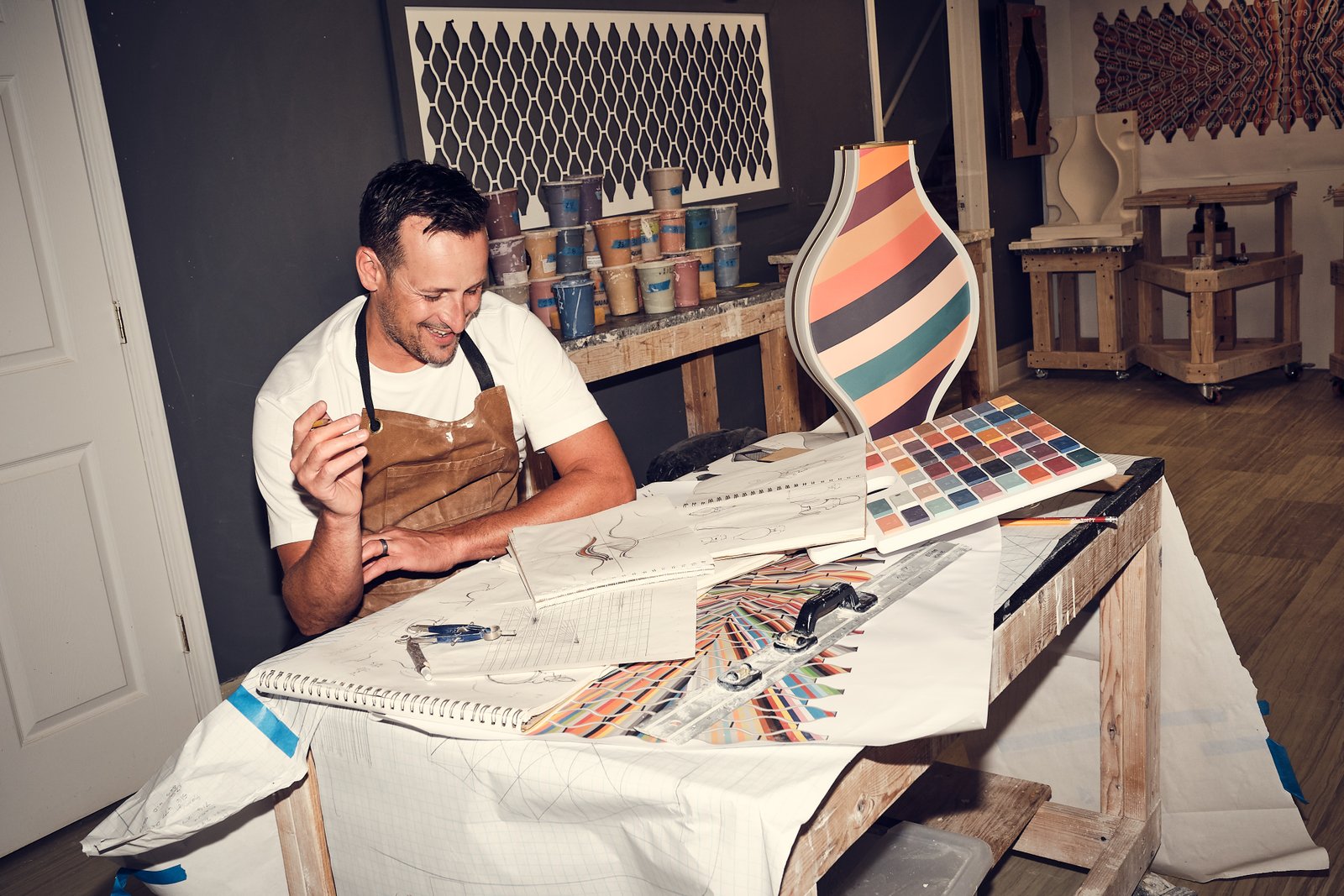
Together in Spirit brings that history into a contemporary studio practice. Peter describes his role as creative director, concentrating largely on structure and the studio as a processing tool, while Laurie served as business director and became deeply involved in the project’s color systems, organization, and financial realities. Laurie reflects, “Peter is full of big ideas. I have over twenty years of experience in having to be the one who filters out the ideas that aren’t feasible, at least not right now. And not if he wants to stay married! In all seriousness, it is Peter’s endless imagination that got us here. But I only wanted to propose ideas that were truly possible to produce at the level of precision required within the timelines set out by Glenmorangie.” Laurie’s work is often about keeping possibility viable.
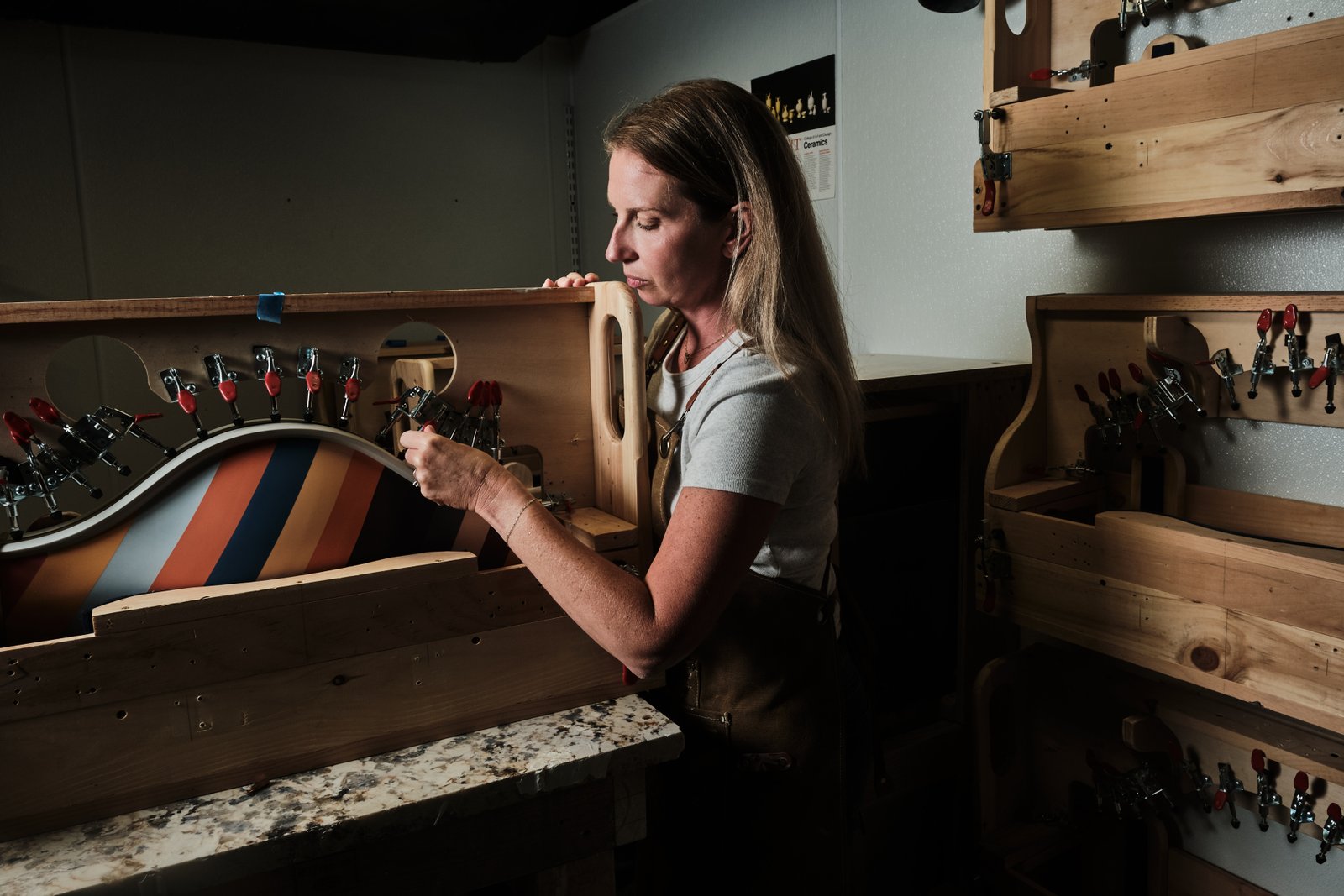 In our interview for this article, one small exchange between them captures this beautifully. Emerging from three years of building an entirely new production model, Peter remembers wanting to return immediately to making: “I’m like, ‘Okay, Laurie, I want to make... this new vase,’ and she’s like, ‘But that’s not where we’re going.’” When he asks what they are supposed to do if they are not making a vase that day, Laurie’s answer is wonderfully simple: “We’re planning for the future.” It is an almost perfect distillation of their partnership. Peter’s attention moves toward the object waiting to be made; Laurie keeps an eye on the horizon, asking what kind of practice must exist for that object, and the ones after it, to become possible.
That forward momentum became important as their two-person practice expanded into a team of ten to fifteen people. Peter is explicit that Laurie’s attention to the financial structure of the project was not peripheral to its success, but necessary to making that expansion possible. Laurie, meanwhile, came away wanting more of that expanded model: “I liked having a team,” she says, later describing how much she valued having coworkers and collaborators beyond the familiar intimacy of their partnership. There is something quietly radical in this aspect of their partnership. Laurie helps imagine and construct the conditions under which their shared practice can evolve. If Peter is continually asking what else clay might become, Laurie is asking an equally consequential question: How can many forms of expertise become one coherent work?
Laurie’s role is particularly important within this model because Together in Spirit demonstrates how authorship can move through different kinds of labor. Her contributions crossed color, problem-solving, administration, interpretation, and the enormous logistical task of moving an ambitious ceramic idea through nearly three years of production. The expanded studio operated similarly, allowing specialized knowledge to move between people rather than simply asking additional hands to reproduce a predetermined object.
Peter describes an environment in which the team tried to listen to everyone and bring forward the ideas of the people working around them. His description of that philosophy is straightforward: “you get very talented people, and then you let them be as talented as they are.” What emerges is a distinctly contemporary version of the historic ceramics workshop, one in which artistic direction and individual expertise can exist simultaneously. The studio becomes a creative structure capable of generating knowledge of its own.
Seen within this longer history, Together in Spirit explores where the traditions of studio craft might lead next. Ceramics has always depended upon accumulated knowledge, whether through apprenticeships, workshops, factories, shared kilns, production potteries, or techniques passed between generations of makers. The Pincuses extend that lineage through a model that moves between artist studio, collaborative workshop, and contemporary production. Their achievement encompasses the 149 vessels and the construction of a system large enough to accommodate many kinds of expertise while preserving the attention, variation, and material sensitivity we associate with handmade objects.
Together in Spirit locates authorship within collective production: in the ability to build relationships between people, materials, processes, and ideas, creating something whose ambition becomes possible because no single person could have made it alone. For Peter, the boundaries of contemporary ceramics are collectively negotiated: “We’re evolving this definition together.”
Philosophical, contemporary, and historical questions aside, Together in Spirit eventually had to confront a far less romantic reality: the work had to pass Glenmorangie’s exacting definition of quality control. For all its experimentation, collective authorship, and expanded definitions of craft, 149 handmade ceramic objects still had to satisfy the uncompromising standards of luxury manufacturing. Ideas could remain fluid. Manufacturing tolerances could not.
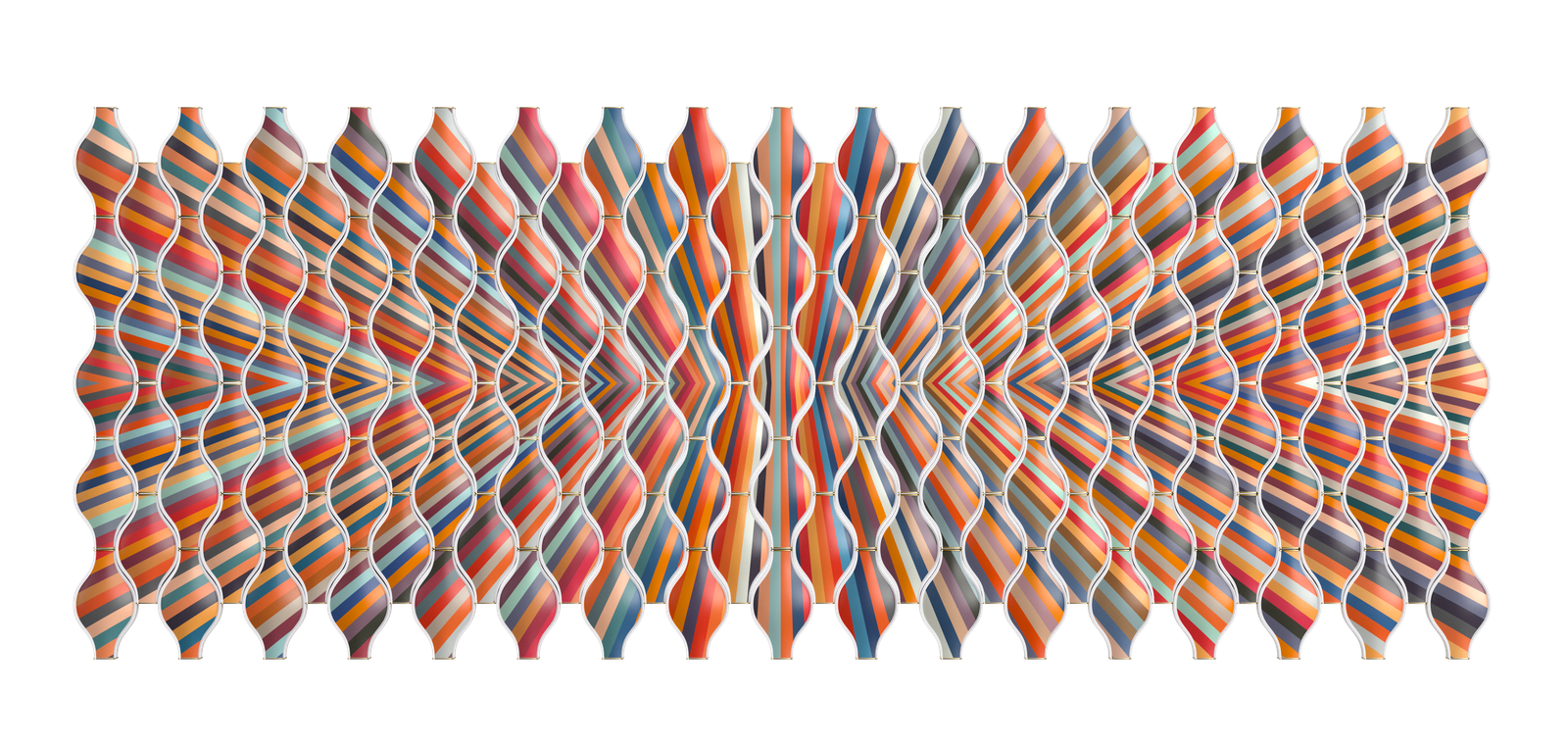
Peter reflects, “We should talk about the back end, new to us was this idea of quality control... few potters I know would have had the stomach for. It was by the millimeter or smaller across every single piece.” Yet Peter simultaneously insisted that the objects retain the qualities that identify them as handmade. “We kept saying, ‘This is what matters in a handmade object,’” he recalls, noting that the quality-control process itself evolved as those evaluating the work came to understand the particularities of handmade ceramics. In this exchange, the Pincuses develop a language in which repetition generates difference, precision preserves evidence of the hand, and manufacturing operates within craft. Their emerging model proposes something more fluid: a contemporary manufactory in which systems make ambitious production possible while material knowledge, human judgment, collaboration, and variation remain essential to the identity of the object. The significance of Together in Spirit lies in demonstrating what becomes possible as the boundaries between studio and factory dissolve.
This is where the ceramic objects become more than elaborate packaging. They become records of accumulated attention. Some vessels had to be made five times before the Pincuses considered them successful. The final objects contain both visible labor and the labor that disappeared in the process: the prototypes, failures, revisions, experiments, and discarded possibilities that made the finished forms possible.
A charming example of the Pincuses dynamic emerges during the interview. Laurie maintains focus on the conversation, speaking about the possibilities of learning from Glenmorangie’s large-scale marketing and production teams, while Peter enthusiastically shares his screen, rapidly pulling up videos and images documenting the problem-solving behind the project. Among them are some of the hundreds of entertaining and arguably comical videos he made to relieve the tension of failures, struggles, and engineering challenges behind the scenes; all in an attempt to reassure the Glenmorangie design team that possible was beyond probable.
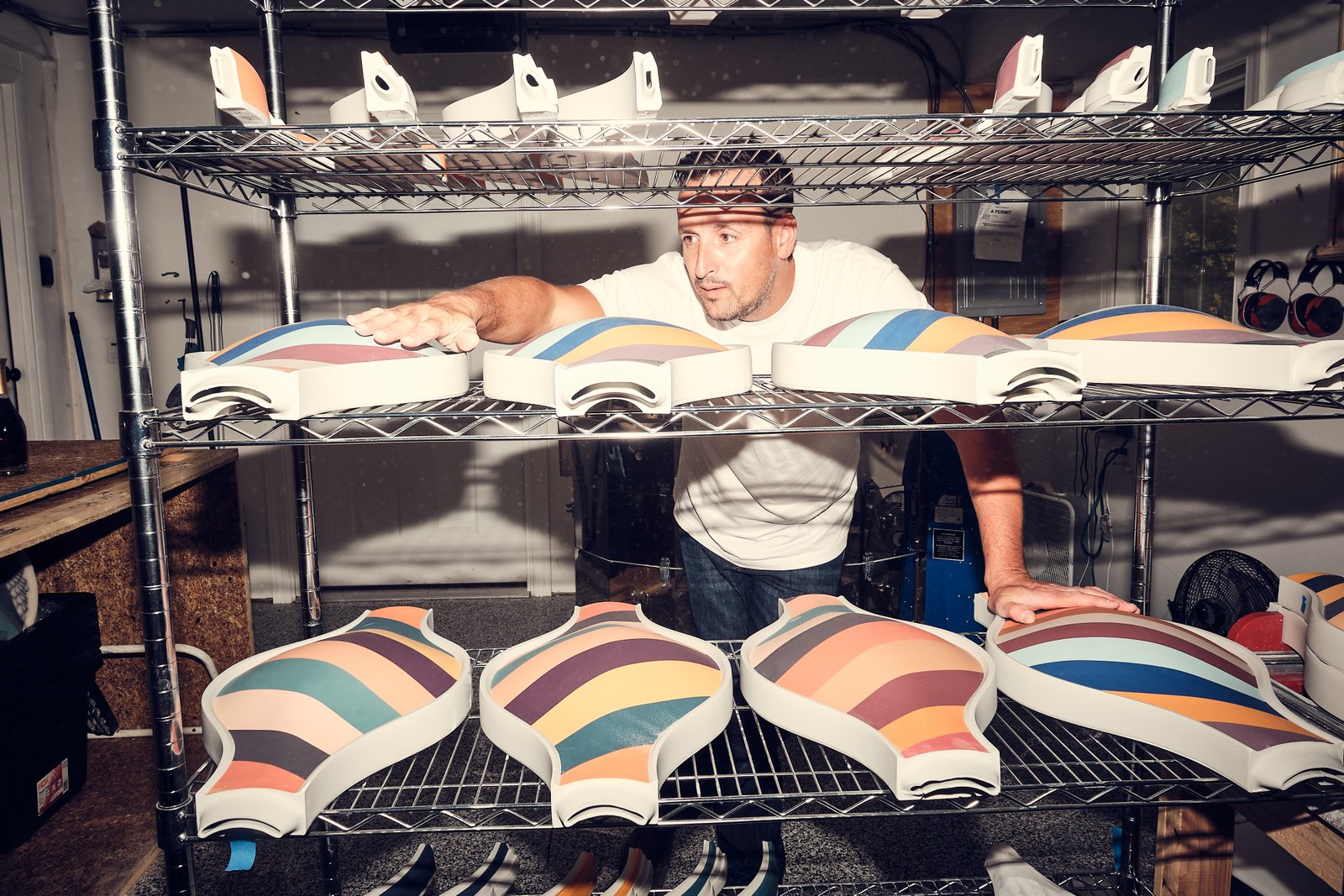 Another revealing dichotomy in Together in Spirit emerges at the point where the romance of the handmade collides with scale. Studio ceramics has long attached value to singularity, cultivating the idea that the handmade object carries an intimate record of one maker’s attention, one set of hands, one concentrated encounter with material. Here, the Pincuses were asked to make 149 objects while preserving that sense of individualized attention.
The Pincuses engineered variation into the production system itself. Complex molds, custom color development, repeated casting, sanding, testing, failure, and refinement allowed the studio to move between consistency and difference. The result is tessellative: a collective work whose identity depends on each component retaining its individuality.
That tension is one of the project’s greatest strengths. The Pincuses built a production system that gives the hand a larger field in which to operate.
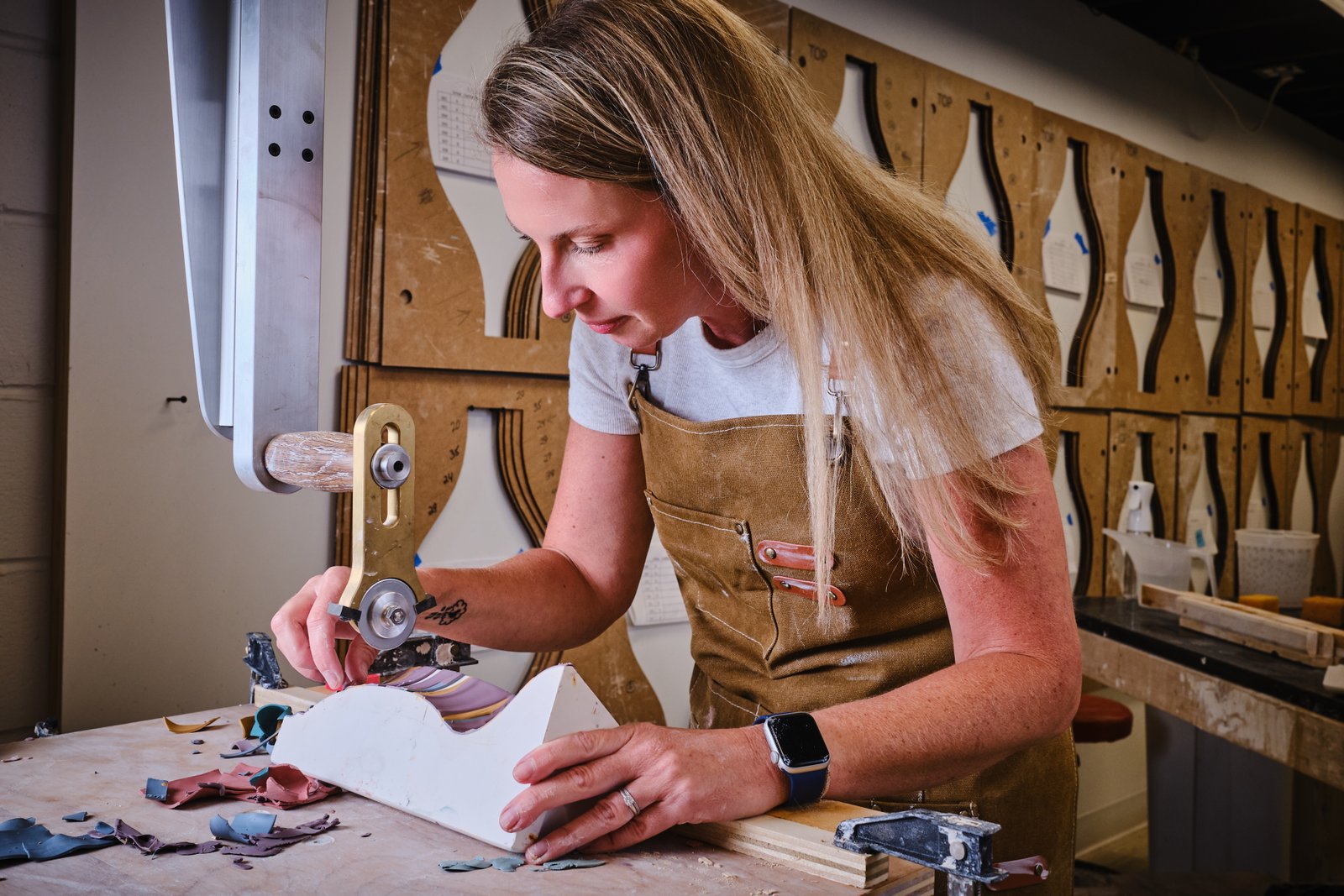 Color provided another way for the vessels to remain individual within the larger system. Laurie began with the whisky itself, explaining, “I took all of the tasting notes that describe this fifty-year palette, like ‘gentle peppery,’ and I gathered images of all of them, then I literally grabbed colors from those images to just to get us started somewhere.” From there, she and Peter worked through the distiller’s descriptions, using flavor and aroma as starting points for the palette. “We would take Glenmorangie's very in-depth descriptions and try to pull from there,” Laurie explains. The process eventually produced fifty separate colors, a direct reference to the whisky’s fifty years. Those colors move through radiating lines across the vessels, so that although the forms belong to the same visual system, no two resolve in exactly the same way. Laurie describes the final palette directly: “I think where the colors landed give you a warm, cozy vibe.”
Perhaps this is where Together in Spirit becomes most legible. The fifty colors begin with flavor, but they end as evidence of translation: taste into image, time into vessel, labor into product, and collaboration into 149 distinct objects. It is the same movement that defines the project as a whole. Something intangible is repeatedly asked to take material form. What began as a commission to house a fifty-year-old whisky ultimately becomes a much larger proposition about what a ceramic vessel can be and how far the language of craft can be pushed without losing the human hand at its center.
—
This is the heart of the critical review, but dare we studio potters indulge for a moment in the synchronicities Peter and Laurie relayed to me in our interview? Because the story of how they arrived here may be just as compelling as the work itself; behind this extraordinary commission is a surprisingly human story.
The partnership with Glenmorangie seems almost uncannily tailor-made for the Pincuses. Long before the commission, whisky, ceramics, and belonging had already become intertwined in Peter’s life. He grew up in affluent Pittsford, New York, where his single mother struggled financially to keep her three children in a school district she believed would give them opportunities. Peter grew up both inside that prestigious world and acutely aware of his distance from its privilege.
When Peter met Laurie at twenty, her father, Mike, quickly became the father figure Peter had never had. A year later, Mike introduced him to single malt whisky. They played pool, tasted whisky, and spent long evenings learning its subtleties. Whisky became bound not simply to taste, but to family and belonging.
This followed Peter into graduate school. His thesis considered how ceramic artists might understand color beyond clay, looking to pop culture and couture to examine the ways color communicates value and status. Among his subjects were urns, perfume bottles, and, remarkably, whisky decanters. He examined products such as Johnnie Walker Red, Black, Green, Gold, and Blue as a hierarchy in which color signals increasing levels of access, taste, and cultural status.
Beneath that research was something deeply personal. Peter understood his attraction to highly refined objects partly through his relationship to the affluent world of his childhood. As he remembers it, “Wayne Higby described it as ‘looking in a window at a world I didn’t belong to, imagining a part of my personality that could exist within an object in that place, and then making that thing to give myself access to a faraway world.’ That is at least how I remember him talking about Pittsford during late night thesis mentorship sessions.”
The synchronicities continued. After graduate school, Laurie became pregnant with their daughter, Evie. Peter’s cousin bought a bottle of Glenmorangie whisky to celebrate, and when Evie was born, the family took a playful photograph of her holding it.
Years later, Peter and Laurie would be commissioned by Glenmorangie to create 149 porcelain vessels for one of its rarest whiskies. Suddenly, histories that had developed independently began to converge. Whisky had already shaped Peter’s understanding of family, aspiration, status, ceramics, and belonging. Now those threads occupied the same object.
The synchronicity extends into the making itself. Glenmorangie’s pursuit of excellence found an unusually fitting counterpart in the Pincuses approach to ceramics. Peter describes the meaning of an object as a “byproduct of how it was made and what care was put into it.” For those of us in clay, it is difficult to miss the alignment. Glenmorangie connected with two ceramic artists whose existing investment in precision, function, form, experimentation, and quality control was remarkably suited to both what the commission required and what a fifty-year whisky represented.
Even their systems of value begin to mirror one another. Peter and Laurie’s labor-intensive ceramic practice meets a whisky whose value has accumulated through decades of material transformation and sustained care. In both, value emerges through process. Care accumulates, and accumulation becomes value.
Of anyone in our clay community, it is difficult to imagine a partnership more perfectly matched to Glenmorangie than the Pincuses. The alignment is almost uncanny: masterful craftsmanship, strategic vision, legacy, family, and an obsessive commitment to making something worthy of the time invested in it. This was more than the right artists meeting the right commission. It was a collision of histories that, in retrospect, feels almost inevitable.
A glass raised to Peter and Laurie: to clay and spirits, time and labor, and the beautiful trouble of making something that matters.
A special thanks from the Pincuses is extended to:
- Sarah Spector and Lukas Easton, who were our right and left hands, brains, emotional supports, and are exceptional ceramic artists;
- Mike Thorpe, who kept specific gravity and viscosity consistent every day for 18-ish months;
- Colleen Graham on adhesives;
- Laurel Fulton on metals;
- Courtney Rashford on 2D design systems;
- Raul Hernandez on ceramic engineering, early CAD, and mold system development;
- Gary Jacobs and Phil Szrama on 3D, the object and rendering;
- David Schnuckel on cold working processes;
- Fabiano Sarra on woodworking;
- Tiree Walker on 3D printing and lasers;
- Will Tracey on tooling and inventive jig systems;
- Chad Grohman on illustration;
- Josh Meltzer on early days studio photography;
- Clay Patrick McBride on official studio photography;
- Elizabeth Lamark on vessel photography;
- Munjal Yagnik on cinematography;
- Graham Turnbull and Julie Hregdovic from standard (we needed a lot of help from them);
- Mike Carrol on materials and kilns;
- Adam Rogers and Pete Basil on wood;
- K&H Precision Products on aluminium;
- Precision Polish LLC on surfacing;
- Tompkins Metal Finishing on anodizing;
- ConeArt makes the best in the business;
- Boulter Industrial on moving every last object without a single scratch – gone are the days of straw and potholes, Joss.;
- Butterfly Cannon on packaging and industrial design;
[1] Josiah Wedgwood’s eighteenth-century Etruria Works, is a historic factory in Staffordshire, England, that serves as the ultimate historical blueprint for combining art, advanced engineering, and rigorous scientific research.