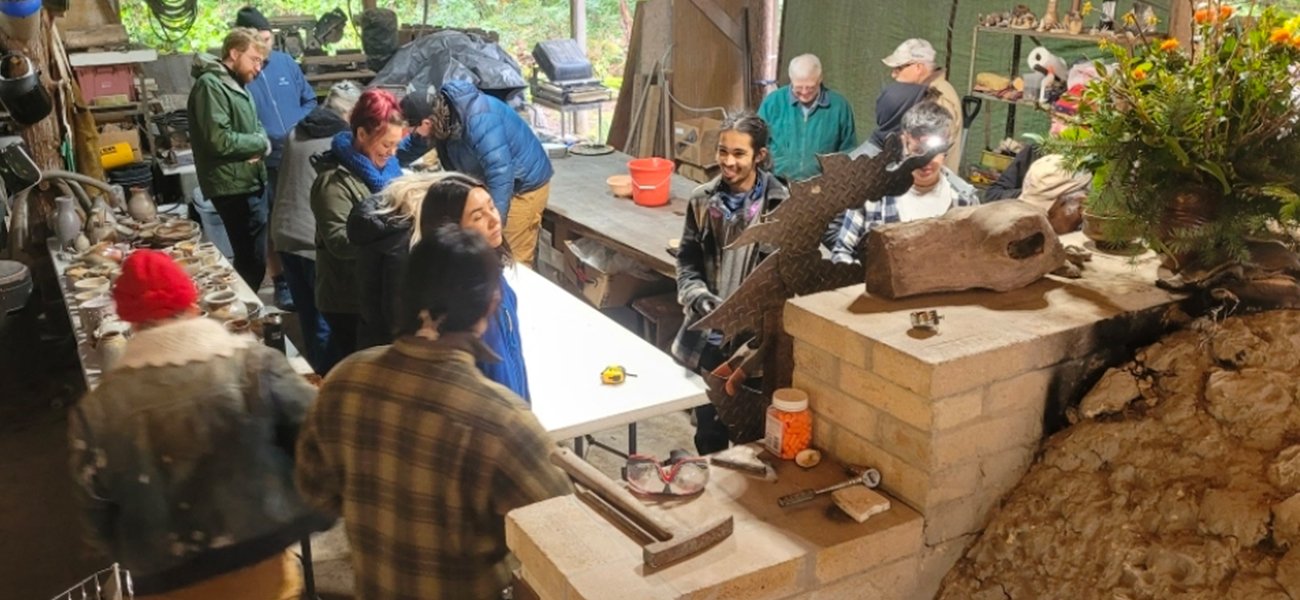
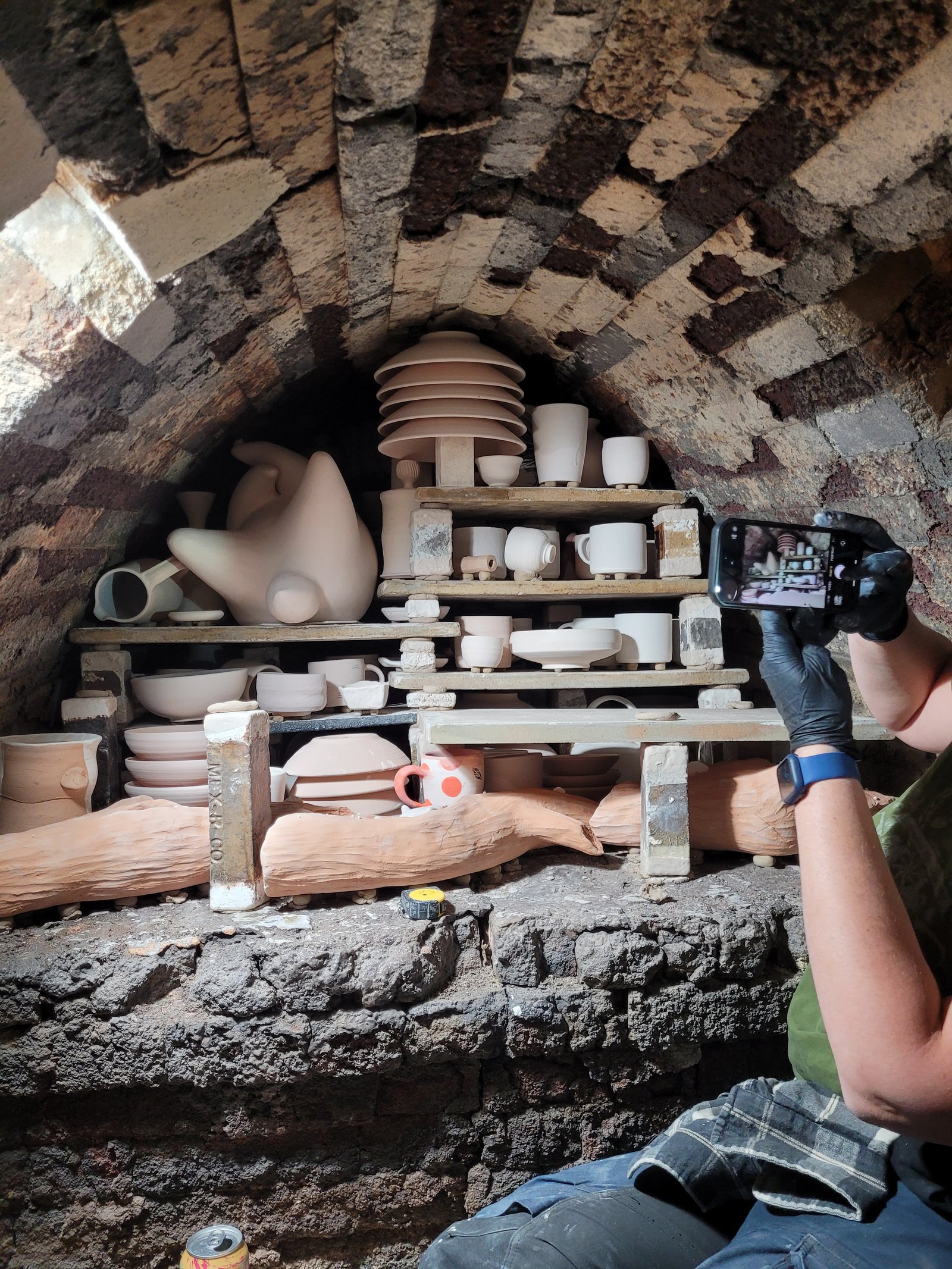
 Once again, we were down to just wet fir to burn. It happened the same way last year, too. We spent so much time in the summer finding, cutting, stacking, and drying. Yet here we were again. The climate along the Salish Sea requires us wood-fire potters to stay in a dogged pursuit of wood that’s dry enough to put in the kiln. Once spring rolls around, it is hard to find anything truly dry. Last summer’s wood, already barely cured, becomes a sponge for the constant winter gloom. Burning wet Douglas fir in a soaked Carhartt jacket is a Pacific Northwest woodfire rite of passage. The wet wood burns slowly, and it builds a cold coal bed. The coals need to be raked often to be invigorated – an additional challenge that could stall any firing. This time, we took an aggressive approach to combat the circumstances, opening the primary air as much as we could and splitting the wood as small as we could get. And just kept stoking. Many things can go wrong during a firing, but you have to keep stoking.
This effort paid off, and this particular firing went well. The temperatures didn't stall, and the embers stayed hot. We got the hot and flashy pots we were after – no crust, weird colors, or surfaces. The results were dynamic, and the soda and wood ash merged well throughout most of the load. It was what we call “good” firing: a broad, sweeping classification in woodfire ceramics that is concealed by a veil of discontentment. Because we don’t just want “good” pots, we want “great” pots. This motivation to excel becomes the rationale for the ouroboros of organizing, making, and firing wood kilns. The player piano plays on.