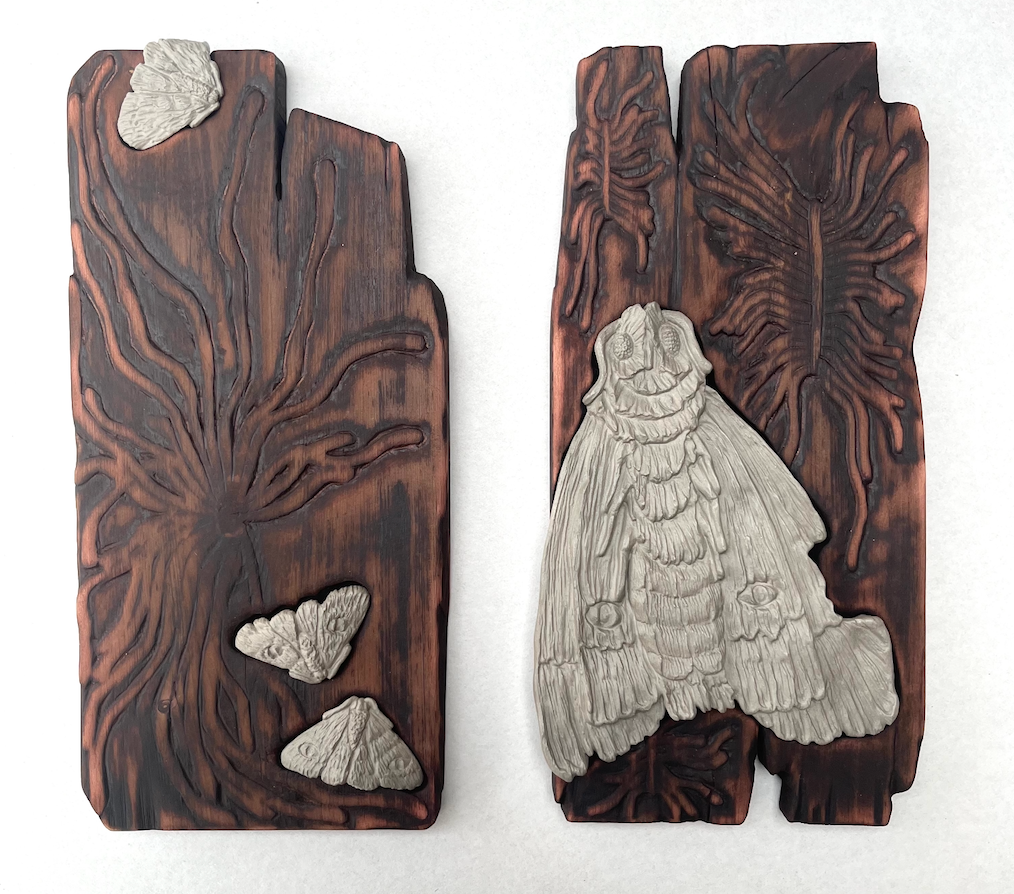

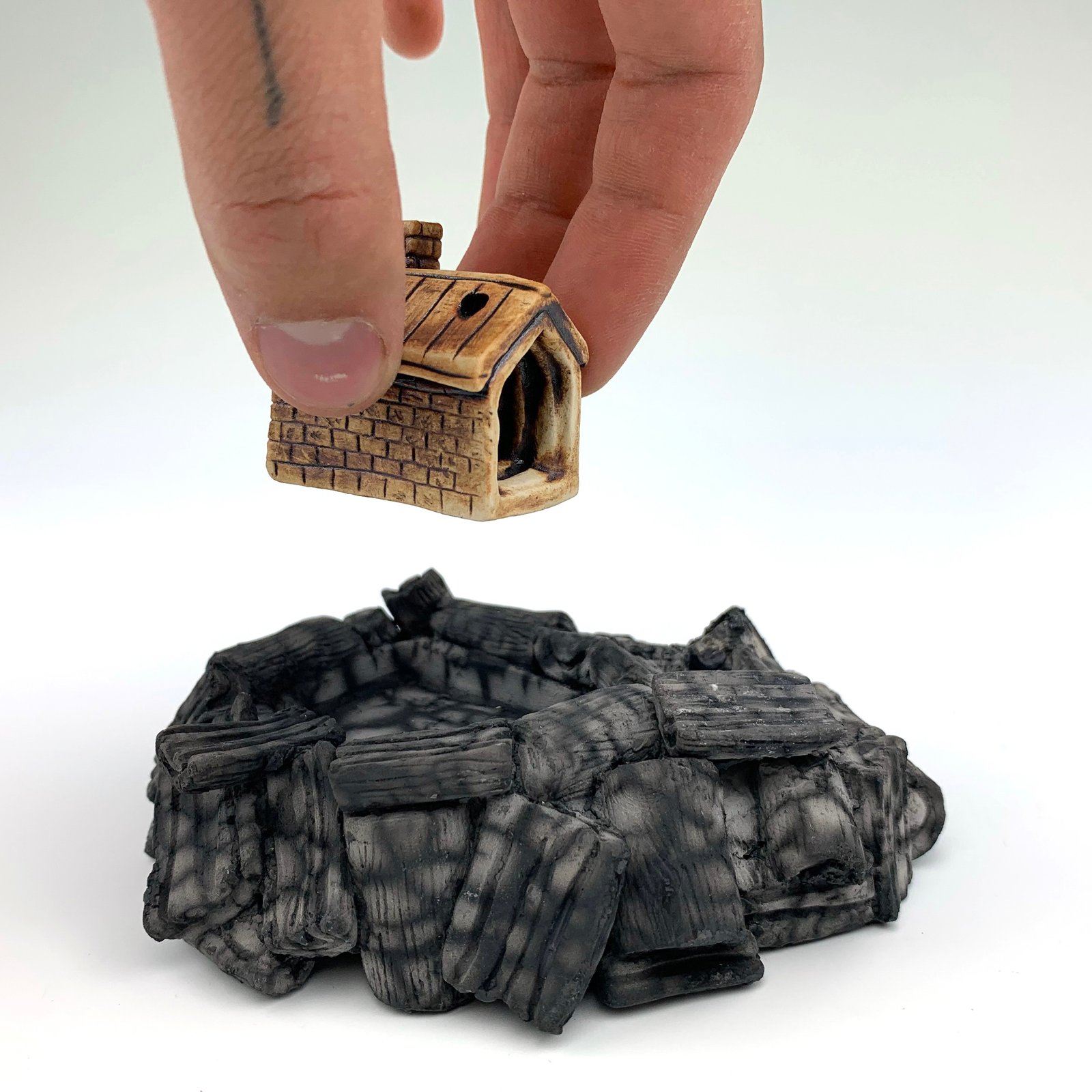
 Driving along a road in northern Minnesota, the eastern white pine rises above the rest. One stood as the cornerstone of my grama’s yard at the end of a long gravel driveway. When it was eventually cut down and only a stump remained, it served as a symbol of the life it lived and the future it continued to nourish. There is so much to learn from the organisms in our lives if only we slowed down long enough to appreciate them. Through observation and research, I translate the lives of these organisms in clay, contrasted with a second material, to reflect the balance of a life lived between cultures.
My work tends to navigate the intersection of belonging and estrangement, love and loss. Back in college, my botany professor deeply influenced how I think, not just about plants but about systems of life. He emphasized how “balance is key,” and would encourage us to never see just one solution but a multitude of potential options. That way of thinking became foundational. I began to see plants not as static subjects, but as parallel structures through which our human experience could be understood.
Over time, I noticed that trees, particularly cedar, reappeared throughout my life. I used to think the sauna my grampa built was lined with cedar, but later learned it was made from old tamarack planks. I also learned that cedar is used in the making of certain types of sake, which is research I was drawn to from looking into the history of the Samurai Sake house my dad used to have. As someone who is half Japanese and half Finnish, I’ve always struggled to find a balance within myself. I’ve always craved to relate with both my sides and have felt like in order to be acknowledged and feel accepted by one community, the other becomes masked momentarily. It’s taken a while for me to accept that I am a keeper of both cultures in my own way. That realization now manifests in the way I blend materials within my work. I add a secondary material as an inlay in my ceramic sculptures or vice versa to reference my own dual nature. Since trees continue to come up, I began researching further into how wood is utilized in Japan and Finland. The initial research for Japanese wood crafts stemmed from the objects I grew up with: my dad’s netsuke collection, shoji screens, and lacquerware. In regard to Finnish traditions, my main focus was on the wood-burning sauna my grampa built that I got to use every summer.